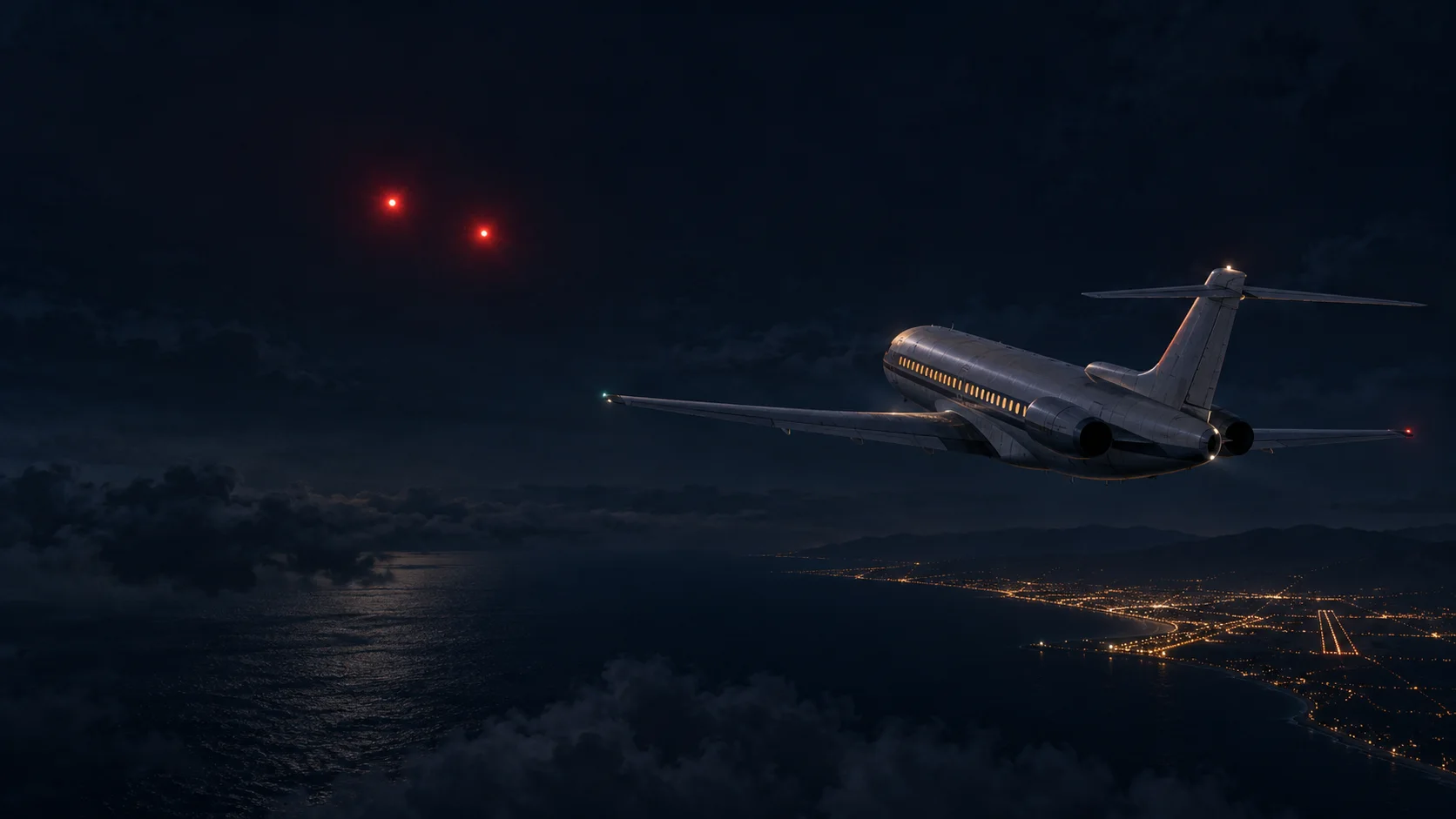
By the time the tanker reached Saginaw Bay, there were lights on the water as well as lights in the air.
Myron Taylor had been watching an irregular series of flashes from aboard the KC-135. In his recollection, the crew had followed them out over Lake Huron, then turned south as the lights changed course. For much of the pursuit he could pick them out by eye. Over the bay, among the lights of the fishing boats, he lost them.
The tanker searched the area and turned back towards Wurtsmith. Then the crew picked up a light behind them, off to the left.
Taylor told that part of the story more than three years later. The night had begun with a guard at a gate and an aircraft flying low enough to draw his attention.
At the back gate
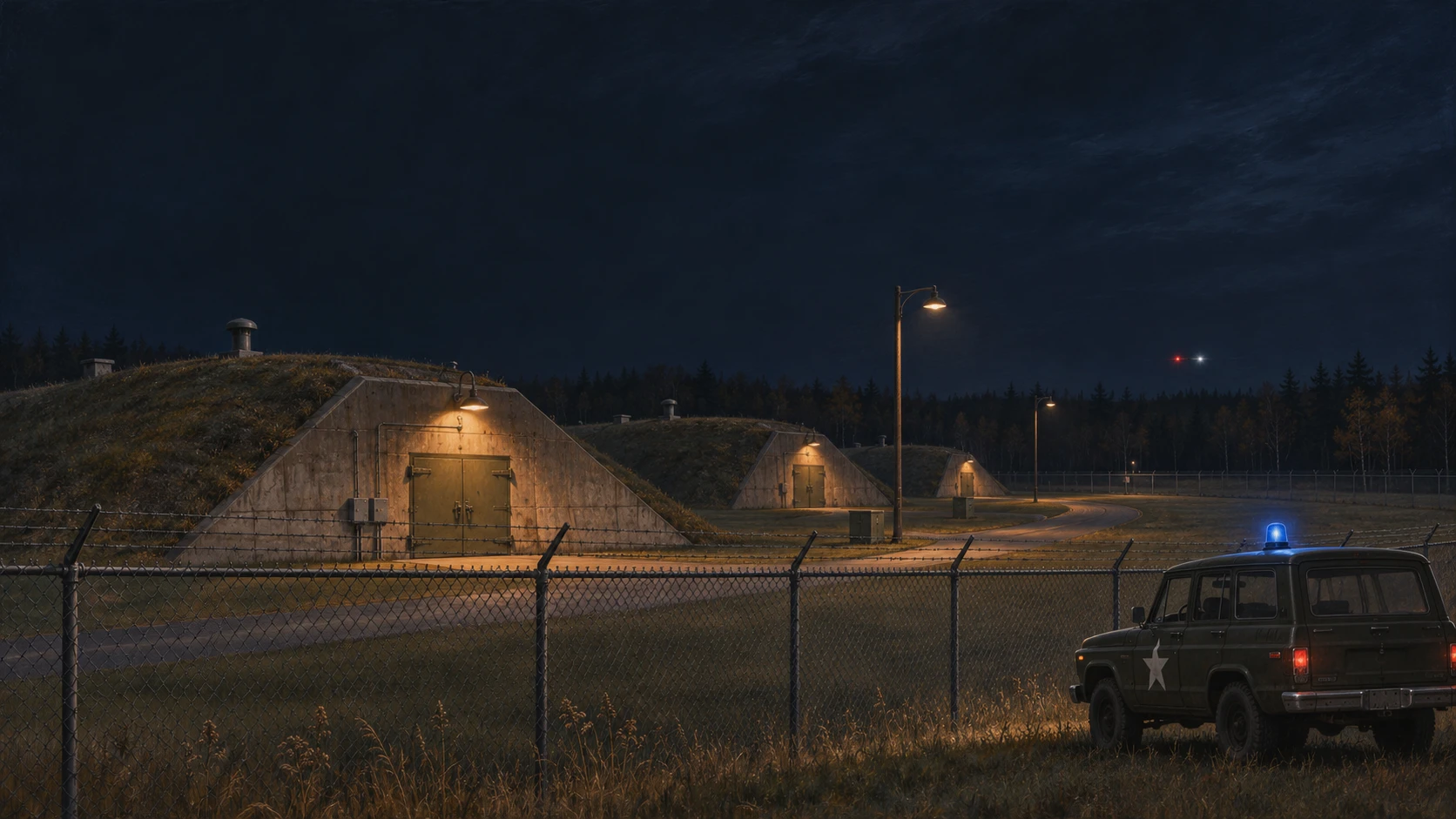
On the evening of October 30, 1975, a security guard reported an unidentified aircraft flying low over Wurtsmith Air Force Base. The base sat inland from Lake Huron near Oscoda, Michigan. Aircraft belonged in the sky there even late in the evening. A guard could hear a military jet pass while trying to listen for something else.
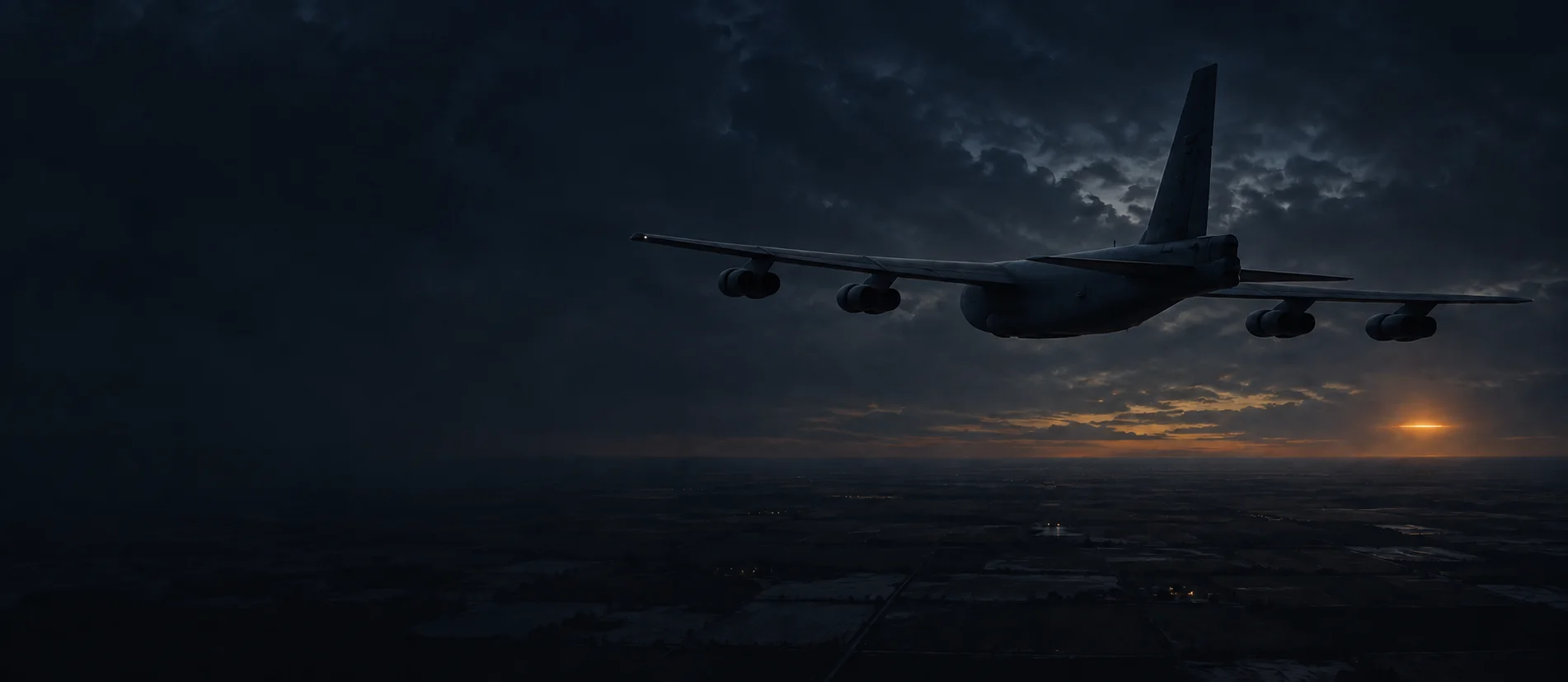
The men on duty watched from different parts of the base. In the accounts later published by Lawrence Fawcett and Barry Greenwood, Airman Martin Tackabury had only a few seconds to look from the gate at the family housing area. He described a white light pointing down and two red lights towards the rear. A B-52 was flying to the north, and he could make out no sound from the lights.
At the motor pool, Airman Michael Myers looked west towards the edge of the base. He saw several lights turn north and appear to drop in altitude. Sergeant Robert Anderson, also at the motor pool, watched a tanker and what appeared to be another aircraft ahead and below it. He remembered a steady red light and a sound that reminded him of a helicopter. His view lasted about half a minute.
Farther away, Sergeant James Miller was manning a post in the weapons storage area. He heard something to the north that sounded to him like a helicopter. A military jet drowned it out. When the jet had passed, the other sound had gone.
Reports went to the command post. One early message put a helicopter over weapons storage. By half past midnight, the operations update would withdraw the hovering report and place the low-flying aircraft sighting near the motor pool. While the reports were still coming in, the base asked a crew already in the air to take a look.
A turn away from the runway
Taylor was aboard a tanker returning from a refueling mission. He was an instructor navigator. The crew had already entered the traffic pattern when approach control directed them towards the reported contact. In the reconstruction published in Clear Intent, Colonel Boardman, the wing commander, had asked the tanker to identify it.
The 379th Bomb Wing’s overnight message catches the search at a moment when the tanker had something on its radar. The return was about eight and a half miles northeast of the base. From the aircraft, the crew could see nothing there.
Later, the tanker reported a visual sighting northeast of Wurtsmith. The wing message describes two aircraft in trail, one behind the other, heading south. The crew estimated their speed at about 150 knots. From the base, controllers could help with bearings whenever they had a return. Out over the shore, the crew had to find the lights for themselves again whenever they went out of sight.
Taylor remembered flashes that resembled strobes. Their timing made it difficult at first to tell how many objects he was looking at. As the flashes continued, he came to think there were two. The way they flickered made him wonder whether one was signaling to the other to keep position. In his account, the tanker went north out over the lake before the lights turned south and the crew followed.
South towards the bay
Once they were heading south, Taylor recalled, the crew called approach control and received clearance to follow the lights as they changed course. He remembered being at roughly two thousand feet. The flashes ahead of the aircraft was easier to keep in view than it was to hold on his radar. He recalled catching a return on his own scope for about ten seconds. From time to time, the controllers could see a contact and give the tanker a new heading.
Taylor guessed that for much of the pursuit they had been about a mile away. Every time they tried to close that distance, he remembered the lights pulling away again. It was close enough to keep watching the flashes and far enough that the crew still had to tell the base they were following something they could not identify.
In the wing report the flight covered the same stretch more than once, south towards Michigan’s Thumb and north again towards the base area. The telex recorded successive losses of visual contact. In the National Military Command Center packet, another overnight update described both sets of lights going out together during the southbound pursuit.
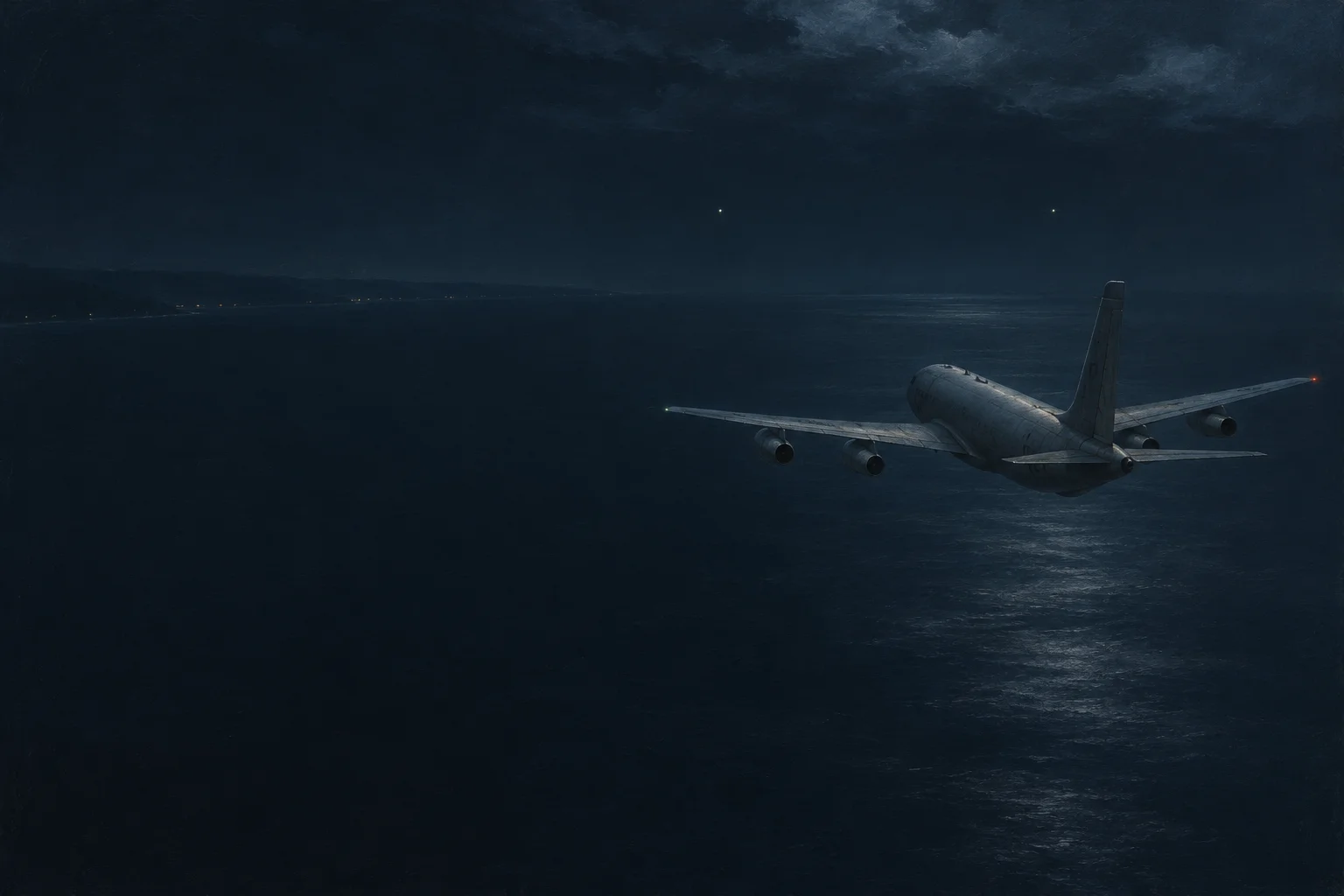
What stayed with Taylor was the difficulty of following a light over water that already had lights of its own. As the tanker reached Saginaw Bay, he recalled, the flashes became hard to pick out among the fishing boats. The crew briefly thought what they had been following might have come down on a large oil tanker. They gave up that idea and continued to look across the bay. When nothing came back into view, they set a course for Wurtsmith.
Off the left rear
On that return leg, Taylor remembered seeing the light at the tanker’s eight o’clock position. It was behind them, on their left. The crew turned away. From Taylor’s seat, it appeared to follow. When they turned back towards it, he recalled it going away rapidly in the direction of the bay.
The tanker headed that way again. Taylor remembered another call from approach control, this time with a radar contact moving west near the coast. The crew took the heading they were given. By then, there was a decision they could make with certainty. Fuel was running low. On the wing’s telex, the last action of the pursuit is the tanker’s landing as it approached its fuel minimum.
Taylor remembered one more glimpse on final approach. He placed the lights near the storage area, where the first reports had sent the tanker looking earlier in the evening. That last glimpse belongs to the account he gave in 1979. For the crew, the flight ended back at the airfield they had been about to land at when the call first came.
What Is Known
The October 30–31 records follow a guard’s report through approach control, the 379th Bomb Wing and the National Military Command Center. They record radar and visual contacts at points in the search, a report of two lighted aircraft, and the tanker’s return as its fuel ran low. The 12:30 a.m. update withdrew the hovering description and reported that approach radar had shown no aircraft near weapons storage. The wing separately raised the possibility that a KC-135 in the local traffic pattern accounted for one sighting near that area. The overnight reports leave the aircraft followed towards the lake unidentified.
In January 1979, wing historian Staff Sergeant Paul Cahill began tracing the episode after an inquiry reached the Air Force. He spoke to John Doran, who had been vice commander on the night of the pursuit, identified members of the crew and reached Taylor by telephone. Taylor put his memory of the flight into an account dated January 18. He recalled the date only approximately, and his descriptions of distance, altitude and speed were estimates. His account preserves the sequence as he remembered experiencing it from the tanker.
The Bigger Picture
Wurtsmith had been an Army flying field before it became a Strategic Air Command base. Its local air museum traces the arrival of the KC-135s from Carswell and the first B-52H, christened State of Michigan. The bombers and tankers were part of the same system. A tanker like the one sent towards the lights ordinarily went looking for an aircraft whose crew expected it to arrive.
That night the tanker crew had a direction from approach control and flashes they could follow by eye. At Saginaw Bay those flashes became part of a view full of other lights. The crew could turn and look again, and they did. Eventually the fuel decided how much longer they could stay over the water.
Sources
- National Military Command Center and 379th Bomb Wing, October 30–31, 1975. Four-page scan of the covering memorandum, operations reports and updates, including the wing’s account of the pursuit.
- Lawrence Fawcett and Barry J. Greenwood, “Wurtsmith and Others,” Clear Intent (1984). NICAP reproduction of the chapter containing the ground accounts, Taylor’s January 18, 1979 memorandum and excerpts from Cahill’s research notes.
- Wurtsmith Air Museum, “Our History – Synopsis”. Independent local history of the installation, its tanker squadron and the arrival of the B-52.