The pilot wanted to land at Valencia. He did not want to continue with the lights beside his aircraft.
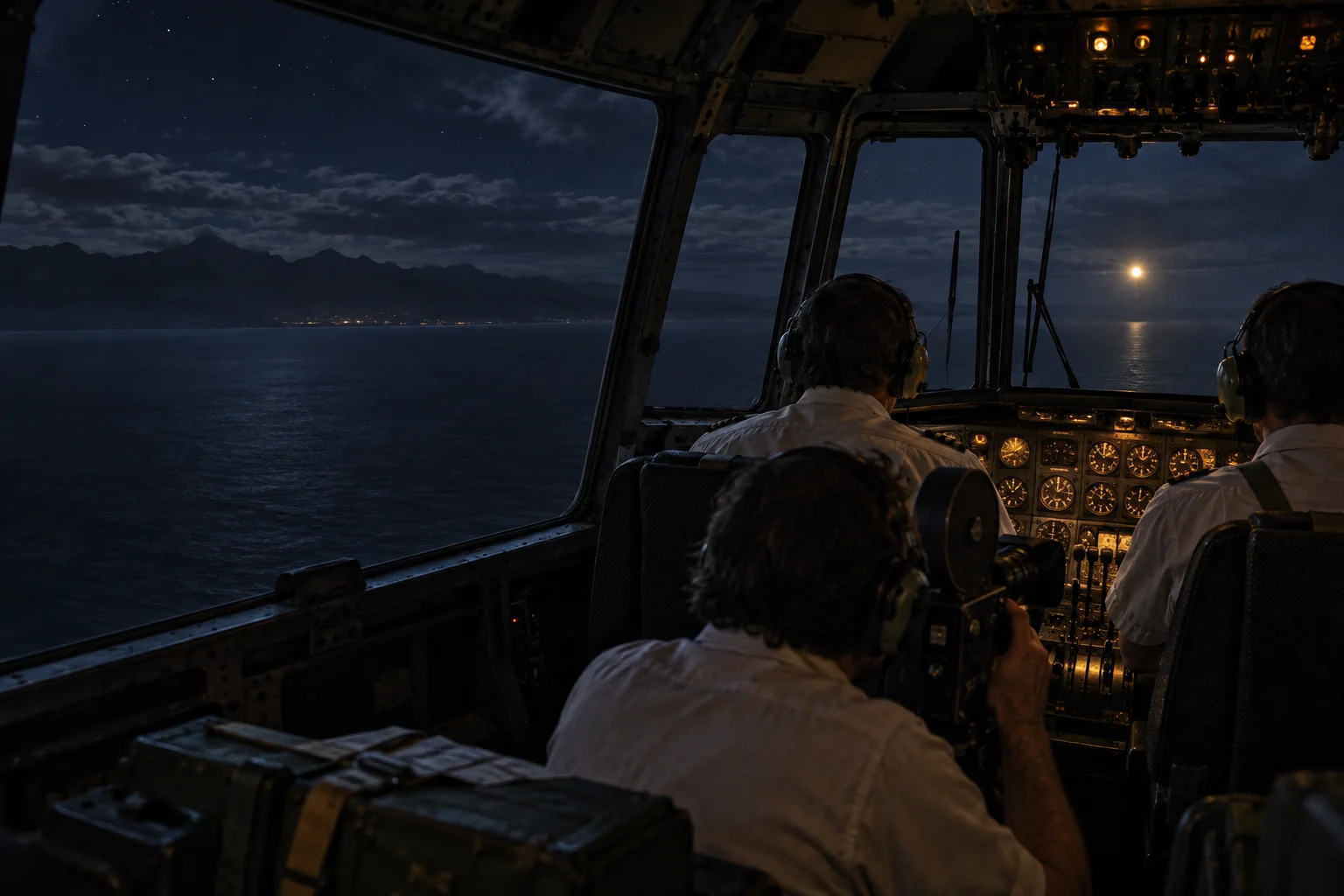
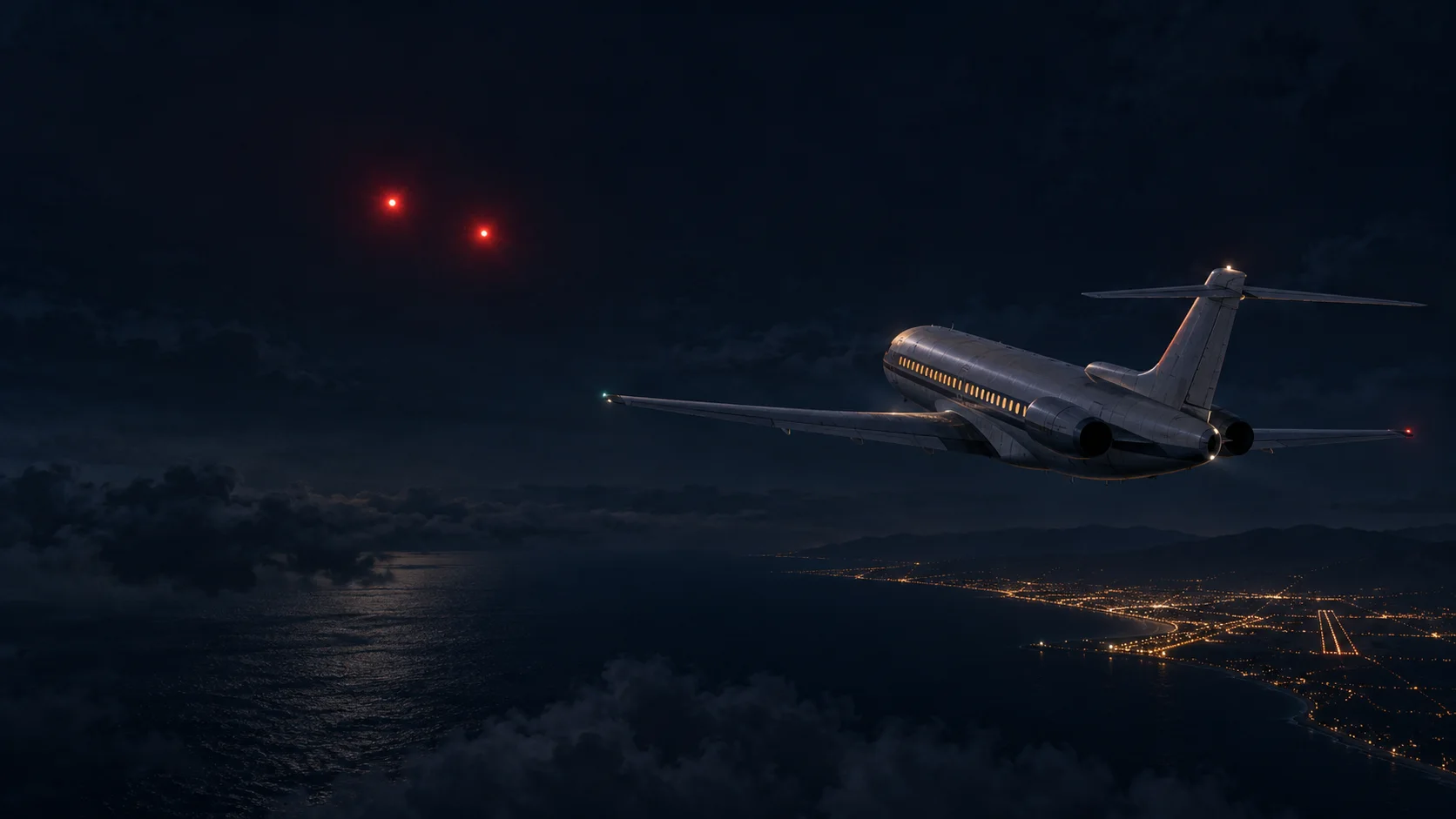
That decision can still be followed through a transcript of the radio traffic. At 22:09Z on November 11, 1979, TAE flight JK297 changed course towards the Spanish coast. It was meant to be flying from Palma de Mallorca to Tenerife. Instead, its crew was describing two red lights that appeared to rise, descend and keep returning to the airliner’s left side.
The controller had no reported aircraft to put there.
JK297 was a Super Caravelle carrying charter passengers. In a newspaper interview five days later, its captain, Javier Lerdo de Tejada, said they were being served dinner and did not see the lights.
A fighter would leave Albacete after the passengers were safely down.
A call on the emergency frequency
The first unusual report concerned a radio signal. According to the Spanish Air Force’s operational summary, Valencia’s tower heard from the search-and-rescue service at 20:27Z about an apparent transmission on 121.5 MHz, the aviation emergency frequency. Its source was unclear.
At 22:02Z Barcelona control asked JK297 to listen. The recorded exchange shows the crew changing frequency, then confirming they could hear a signal they could not identify.
Three minutes later the crew had a different concern. They asked Barcelona whether any traffic was approaching from their left. They reported two red lights at roughly their own level, apparently three miles away and bearing about ten o’clock from the cockpit.
The controller answered that no nearby traffic had been notified. He asked for the lights’ position, then checked again with Palma. Nothing in the traffic information supplied an obvious aircraft for the crew to expect in that place.
Their apparent bearing, altitude and separation had to be reported as the airliner moved.
The pair of red lights
At 22:08Z JK297 said the two red lights were fixed rather than flashing. The crew reported that the apparent traffic was getting closer and seemed to climb faster than their airliner. By 22:09Z the pilot had set a course for Valencia.
Barcelona asked whether he wanted an air-defence interceptor contacted. He said yes. He then reported that the lights were less than half a mile away and had dropped thousands of feet below them. Moments later, in the crew’s account, they seemed almost level again.
The pilot requested descent and said the lights remained in view. He described passing them, only to report them at eleven o’clock again. At 22:15Z he said they were behind and below the airliner on its left.
In his later El País interview, Lerdo de Tejada treated the paired lights as if they belonged to one large object. He said they had approached quickly and seemed to remain with the aircraft for part of its route. That was the captain’s interpretation of what the crew saw. The Air Force summary would later state that they had not seen a discernible object behind the lights.
The transcript records the crew’s distance estimates, but supplies no measured range to the lights.
Turning towards Manises
At 22:11Z the crew made the consequence of that belief explicit: they wanted to land at Valencia. Barcelona began clearing the airliner down through successive flight levels and contacted defence authorities about possible anomalies on their screens.
Another aircraft, a Spantax flight, came onto the frequency. Its crew asked where the TAE aircraft was and said they could see nothing from their own position. JK297 gave its distance from Valencia and continued describing the lights. That brief exchange placed another cockpit within the conversation, though it offered no matching visual observation.
Barcelona then handed JK297 to Valencia control. The crew continued its descent and approach. In the Air Force summary, the pilot reported at 22:24Z that the red lights had finally disappeared from view. The unidentified emergency-frequency signal was no longer heard at about the same time. The report records that coincidence without establishing a connection between the two.
At 22:45Z the Caravelle landed at Manises. In November, those Z-times were one hour behind local Spanish clock time: the touchdown came shortly before midnight in Valencia.
The diversion itself was an observable result of the encounter, regardless of what the lights proved to be.
A fighter goes up
People at Valencia airport went outside after hearing about the arrival. The Air Force summary says they noticed several unusually bright lights from the apron. One seemed to show green, red and white flashes towards the east-southeast. These were ground observations after the airliner had landed, not a second cockpit view of the same apparent pair.
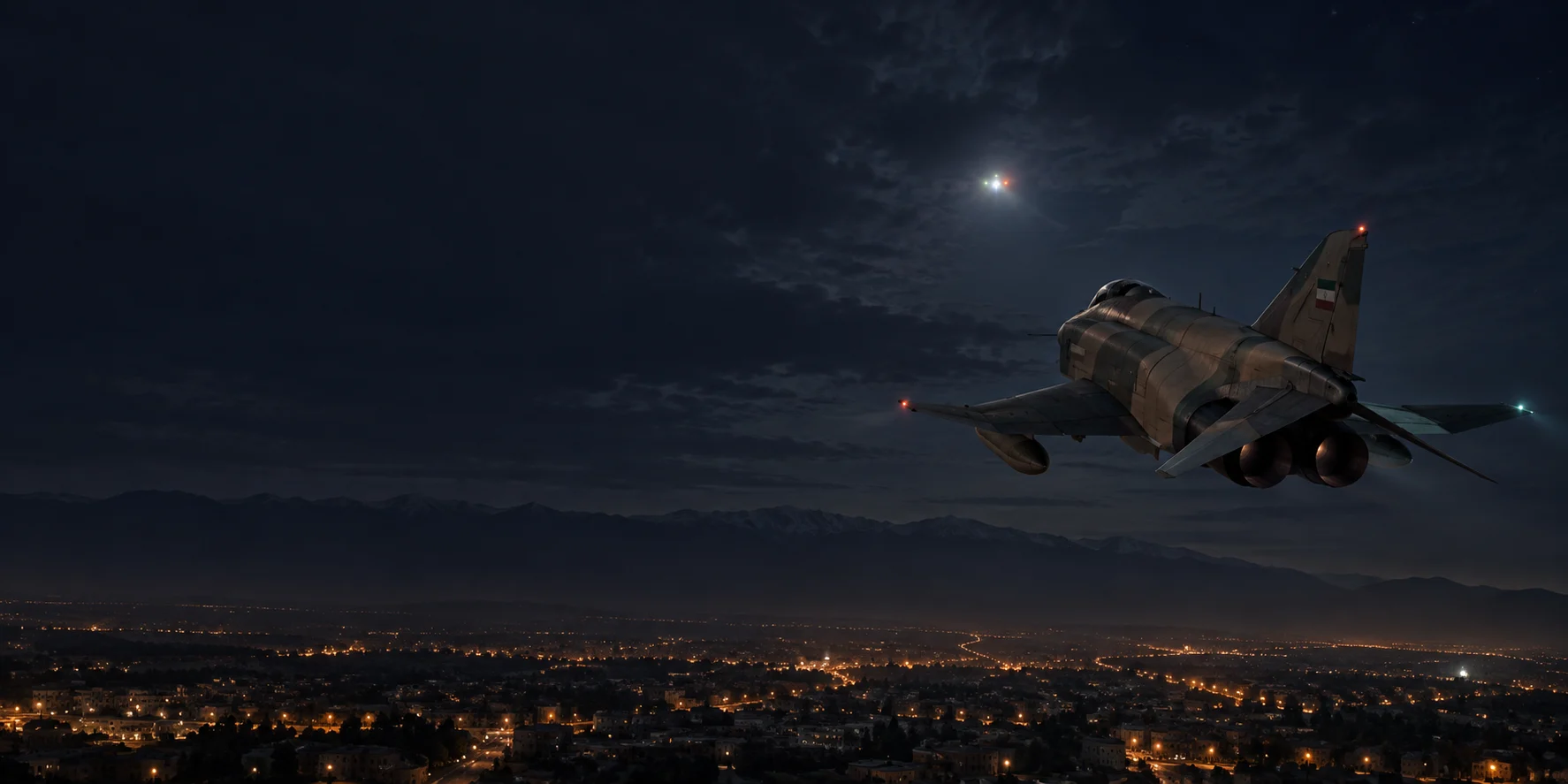
At Albacete, a fighter was ordered up. A military mission chronology in the file records the scramble order at 23:26Z, takeoff at 23:40Z and radio contact with the controller code-named Pegaso two minutes later. The search thus began nearly an hour after JK297’s landing.
The fighter pilot saw lights too. At 23:53Z the mission report put white lights low relative to his position and said he could not determine their distance or altitude. As he headed towards them, they did not seem to draw nearer. Radio interference appeared intermittently; the report also notes alerts from the fighter’s warning system. Neither observation by itself identifies the lights.
Over Valencia, the pilot described green, white and red lights. He continued the search towards the Valencia–Sagunto–Columbretes area. At one point he believed a light had come closer, then reconsidered: its brightness may have increased while its distance remained unknown. The patrol continued, but he could not obtain a useful approach.
At 00:17Z on November 12 he broke off pursuit of the lights. After another sweep of the area, he returned for fuel, leaving Pegaso’s frequency at 00:57Z and landing at Albacete at 01:07Z. The Air Force’s summary says neither the fighter nor Pegaso established radar contact with an object during that mission. The pilot’s visual observations and the reported interference remained in the file.
The account reaches the newspapers
The diversion was reported promptly. When El País interviewed Lerdo de Tejada on November 16, he described two powerful red lights and insisted they did not behave like a familiar aircraft. The article also passed along radar and fighter claims that its reporter said had not been officially confirmed at that point.
The official file supplied the radio transcript and fighter mission report. It shows why the captain diverted: the lights seemed to be converging, and the controller could name no corresponding traffic.
That is the tension at the heart of Manises. The crew made a real change of route in response to what it saw. The fighter’s search was real too. Yet the two phases did not produce a single, continuous tracked object moving from the airliner’s wing to the fighter’s instruments. A night that began with a question about a possible emergency signal became a case about how several observers tried to assign a position to lights in a wide sky.
What Is Known
The declassified Spanish Air Force dossier establishes that JK297 diverted to Valencia–Manises on November 11, 1979, and landed at 22:45Z. Its contemporaneous Barcelona control transcript records the crew reporting two red lights, requesting information about traffic and choosing to land. The fighter chronology records a later scramble, visual reports and a return without an identified target.
The crew reported lights, not a resolved craft. The fighter pilot also reported lights, but the official summary says the fighter and its controller did not obtain radar contact with an object on that mission. Reports of radio interference and warning-system activity belong to the military account; the file does not demonstrate that an unknown craft caused them. The emergency-frequency signal was heard before the sighting, but its source was not established in the material examined here.
In the captain’s contemporary interview, he interpreted the two lights as one large, fast-moving object. That interview is valuable testimony, but its size and range estimates are not measurements. The later ground and fighter observations are documented separately. They cannot automatically be joined to the same physical source simply because they occurred during the same night.
The Bigger Picture
Manises became one of Spain’s best-known UFO cases partly because it left an unusually tangible operational trail: an airliner diversion, radio exchanges and a military search. The Spanish Ministry of Defence’s archive explains that it began declassifying these case files in 1991 and made digitised copies available to the public. The Manises dossier groups the events of November 11 with separate reports from November 17 and 28; their shared folder number does not make them one continuous encounter.
Explanations were proposed almost immediately. In January 1980, El País reported that local investigators were considering a military-aircraft hypothesis and atmospheric effects. Those were lines of inquiry, not a demonstrated identification of the lights beside JK297. The Air Force file itself is more precise about what each participant reported than about what produced every light.
The lasting image is not a fighter closing on a mysterious machine. It is the airliner’s radio exchange: a captain asking what traffic is beside him, a controller finding none to report, and a turn towards an airport that had not been on the flight plan. The record preserves the decision clearly. The cause of the lights remains less certain.
Sources
- Spanish Air Force, declassified case file 791111/791117/791128. Original 150-page scan hosted by RealUFO; the November 11 material includes the operational summary, Barcelona control transcript and fighter mission chronology. Official Ministry of Defence catalog entry.
- El País, interview with Captain Javier Lerdo de Tejada, November 16, 1979. Contemporary first-person account, with some unconfirmed reporting alongside the interview.
- El País, report on proposed explanations, January 25, 1980. Contemporary report of investigators’ hypotheses, not a final identification.
- Spanish Ministry of Defence, introduction to its declassified case collection. Institutional context for the release and structure of the records.