Staff Sergeant Danny K. Lewis saw the lights near the northern perimeter.
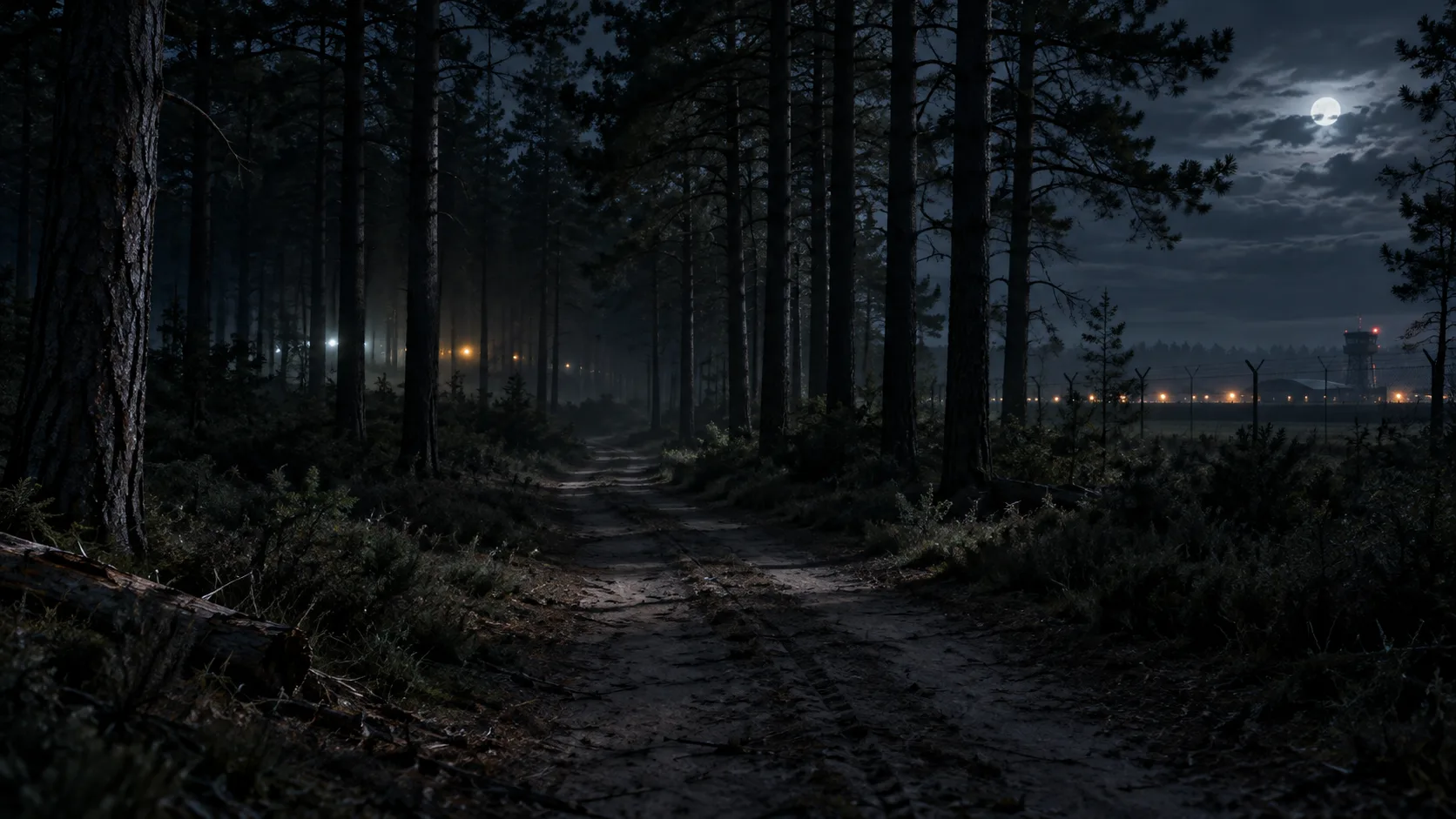
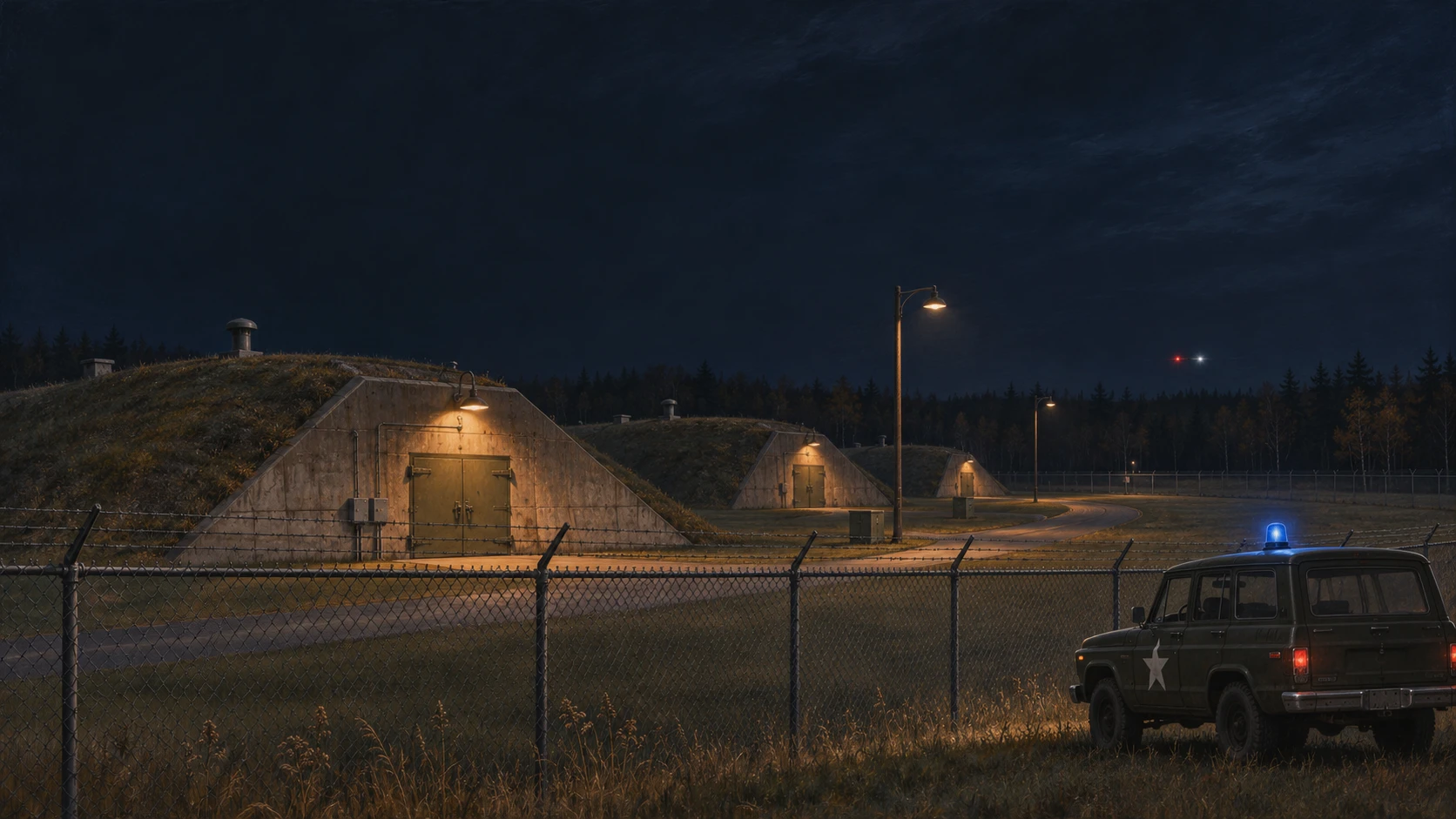
It was about 7:45 p.m. on October 27, 1975. He was guarding the weapons storage area at Loring Air Force Base, in northeastern Maine. The approaching aircraft appeared to carry a red navigation light and a white strobe. It was low, and it was coming inside the boundary.
In the reconstruction published by Lawrence Fawcett and Barry Greenwood in 1984, Lewis reported an intruder within roughly three hundred yards of the weapons area. The estimate placed it about a hundred and fifty feet above the ground.
Behind the guards lay the storage complex for a nuclear bomber base. An unidentified aircraft was approaching the place they were there to protect.
Across the perimeter
Loring’s weapons area occupied a separate, heavily secured landscape. Storage igloos, assembly buildings and service roads stood within belts of fencing. The federal architectural record describes a facility built to receive, maintain and prepare atomic weapons for delivery to aircraft.
A light crossing that boundary became a matter for the command post.
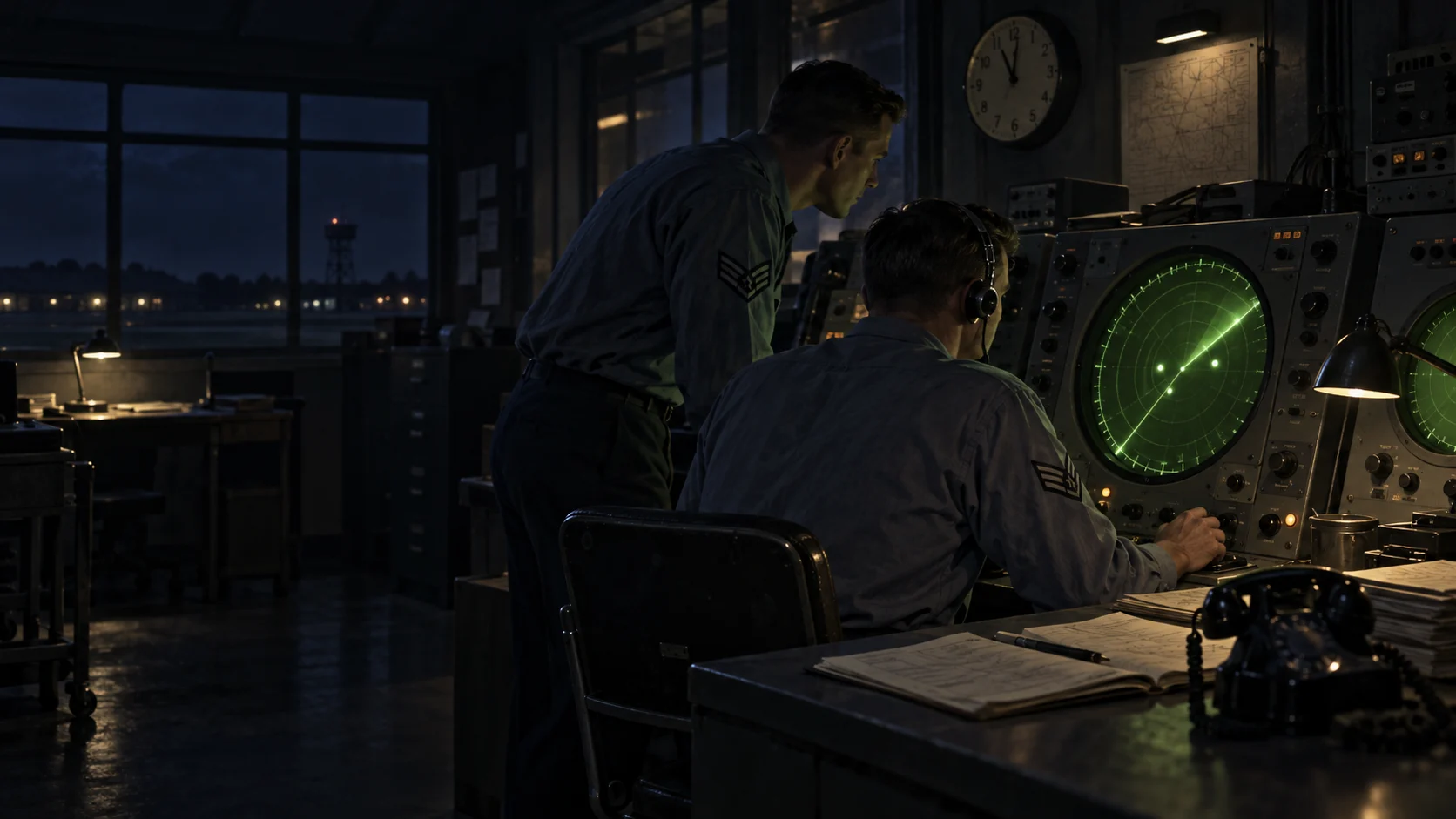
The initial night’s account describes attempts to reach the aircraft by radio, calls to local authorities and a search of the area. No identification followed. Security remained heightened after the reported aircraft departed towards New Brunswick.
By the following morning, the incident had travelled beyond Maine. At 6:10 a.m. on October 28, a CIA Operations Center log recorded receipt of a military update about unidentified helicopters reported to have penetrated Loring from Canada. The information was received through the Defense Intelligence Agency and disseminated.
The entry occupied only a few lines. At the base, personnel were preparing for another night beside the same fence.
The lights return
On the evening of October 28, the guards reported lights again.
Fawcett and Greenwood’s account places Lewis with Sergeants Clifton Blakeslee and William Long at the storage area. A flashing white light and an amber or orange light approached from the north. Colonel Richard Chapman, the wing commander, came to the area and also watched. The movement suggested a helicopter.
The report had drawn the commander back to the place where the previous night’s concern had begun. The problem was still immediate: someone had to establish what was flying near the weapons.
An Army National Guard helicopter would be brought into the search. The aircraft could take observers above the roads and fences, towards positions being reported from below.
For one group working on the flight line, the night would later be remembered through a much closer view.
The launch truck
In the later account collected by Fawcett and Greenwood, B-52 crew chief Steven Eichner was working with Sergeant R. Jones and other crew members when they noticed a red-orange object. They described an elongated shape, resembling a football, which disappeared when its lights went out and then became visible again.
The men drove towards it in their truck. Near the road to the weapons area, Eichner recalled seeing it ahead, apparently hovering only a few feet above the ground. Its colours seemed to blend through a wavering distortion. He remembered no sound.
Security vehicles converged on the area. The crew withdrew to their original position and watched from there. According to the account, they did not report their close view at the time because their approach had taken them into a restricted area.
That remembered encounter would become one of Loring’s most striking scenes. Elsewhere on the base, the search was proceeding through command channels, with an aircraft, a crew and permission to pursue.
Above the storage area
The National Military Command Center’s updates place two further reported sightings in the early hours of October 29.
At about one in the morning, an unidentified helicopter was reported a few hundred metres from the weapons storage area, at an estimated altitude of a hundred and fifty feet. The Army National Guard helicopter responded but could not contact or identify it.
At about three, the intruder was reported over the storage area itself. The search helicopter responded again. Once more, no identification resulted.
A memorandum prepared at 6:05 a.m. recorded the overnight activity. Strategic Air Command had informed NORAD, and Canadian permission had been obtained to enter Canadian airspace if necessary. At 4:04 a.m., the command centre had received word that the assisting helicopter had not sighted the reported intruder.
The ground reports had produced an airborne search. They had not produced a meeting in the air.
Where the men pointed
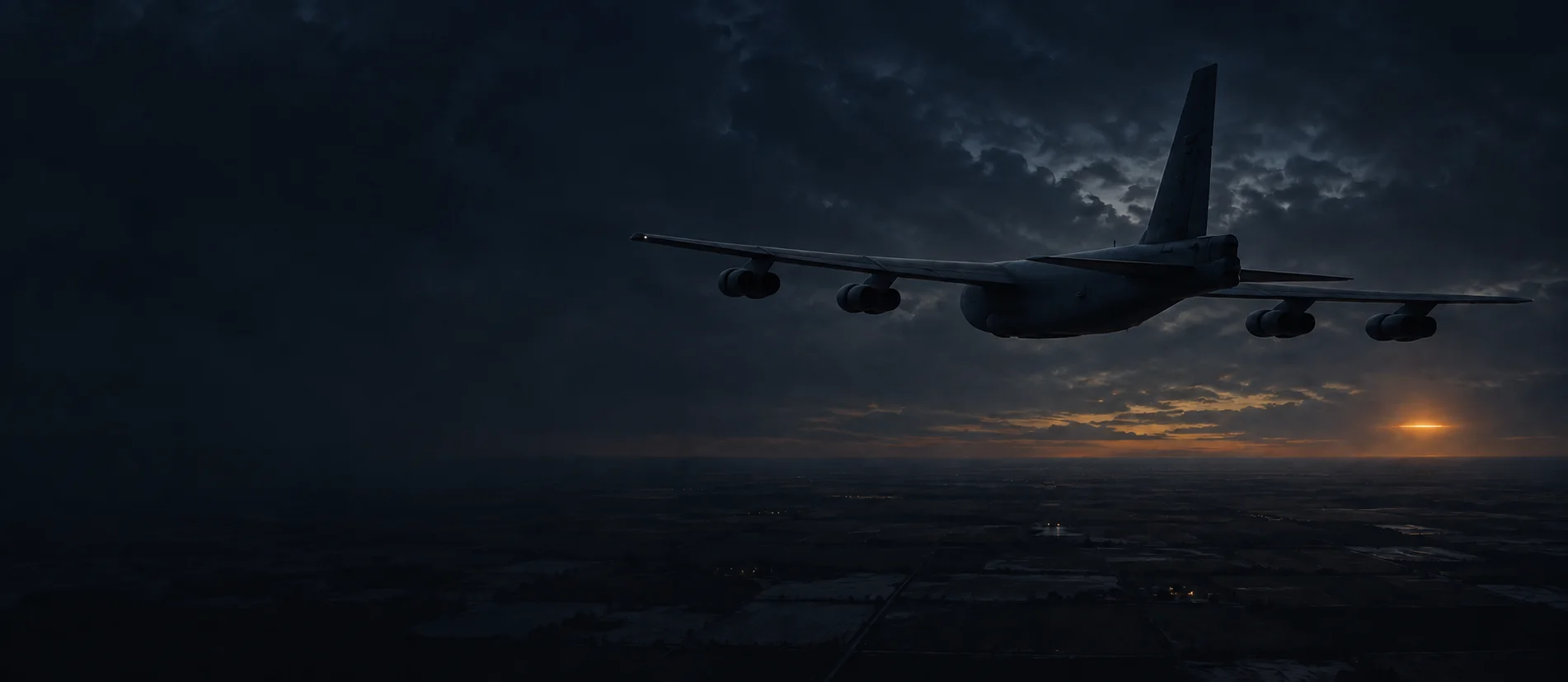
Chief Warrant Officer Bernard Poulin was one of the helicopter pilots assigned to Loring. Interviewed by Larry Fawcett on August 27, 1982, he recalled being briefed by Chapman and directed towards an aircraft thought to be a helicopter.
Security personnel aboard carried a radio. Calls from the ground supplied locations, and the crew flew to them. Poulin remembered searching for about forty minutes, returning to wait, then launching in response to further reports over the course of the assignment.
He described taking the helicopter low and sweeping the indicated area with its searchlight. The crew still could not see the intruder. On one occasion, he recalled, a radar return proved to be a KC-135 arriving from overseas.
The men below could give directions. Poulin could fly to the location and illuminate it. The object they were trying to identify remained outside his view.
Permission to follow
The search crossed an administrative boundary before it crossed an international one.
The NMCC updates trace the arrangements for using the Guard helicopter: placing its crew on full-time training duty, specifying who could ride aboard, and limiting the mission to tracking and identification. Different updates record the changing conditions for entering Canada. By the October 30 morning update, entry was permitted with Canadian consent.
A surviving wing operational-message page conveys the difficulty at the scene. It reports ground personnel directing the search helicopter to within a hundred feet of the unknown aircraft, with both reportedly in sight from below, but no visual acquisition from the helicopter.
A KC-135 had been orbiting to assist with identification and serve as a radio relay. Contact was lost. The base increased local security and anticipated further incidents.
The same message records coordination with Maine State Police and the Royal Canadian Mounted Police. If a landing occurred in Canada, Canadian police would respond. The search now extended from the weapons-area guards to aircrew, military headquarters and officers across the border.
Another watch
By 1 p.m. on October 30, an NMCC update reported that the intruder had not returned on the evening of October 29. An Air Force helicopter from Plattsburgh was being planned for future operations.
That quiet evening did not end the reports.
An Air Force Office of Special Investigations teletype, reporting on October 31 and November 1, describes further observations. Technical Sergeant David Mott heard a main rotor and reported seeing a tail rotor and the reflection of a red rotating beacon beneath a dark aircraft. Another sergeant observed it passing near the west gate.
The teletype also records two unsuccessful launches of an alert helicopter. Its assessment was that the information indicated a helicopter, while the aircraft remained unidentified.
The guards continued their watches. Aircraft came to search. Reports went up the chain. The base had responded repeatedly, but no name, registration or confirmed operator had been attached to the intruder.
What Is Known
Loring has a contemporary operational record. The October 29–30 NMCC memorandum and updates document reported low-altitude intrusions, helicopter searches, increased coordination and arrangements for possible pursuit into Canada. The wing message preserves the reported gap between what ground observers could see and what the search crew could acquire.
The November AFOSI teletype includes observations consistent with a conventional helicopter: rotor sound, a reported tail rotor and a beacon. Its description of an unidentified aircraft records the limit of the identification achieved. It does not establish an extraordinary vehicle.
The more intimate scenes have a different provenance. Eichner’s close view appears in Fawcett and Greenwood’s later account; Poulin’s interview was conducted in 1982, almost seven years after the assignment. Their recollections add personal perspectives to the operational sequence. They should retain those dates when read alongside the messages written during the events.
The records establish a security response to reported aircraft around a sensitive installation. They do not establish that nuclear weapons were disabled or altered. Loring’s documented disturbance was the repeated intrusion report and the effort it demanded from the people responsible for the base.
The Bigger Picture
The weapons area explains why those reports carried such weight. Its first code name was Site Easy. The Historic American Engineering Record describes its development as a forward distribution point for atomic weapons, with separate areas for storage, assembly and spare parts. Readiness depended on moving weapons safely through that landscape and onto aircraft.
Crews trained for the entire sequence. Unannounced exercises could call them out during the night to assemble, test, transport and load a training weapon, then reverse the process after the aircraft returned. Security protected a working system whose purpose extended far beyond the fence.
In October 1975, an unfamiliar aircraft entered that system’s attention. The response drew on its existing machinery: guards, radios, search aircraft, command posts and international arrangements. The surviving messages allow the disturbance to be followed through those practical actions.
The helicopter could reach the position the guards supplied. A searchlight could sweep the ground. The missing step was the one that would let everyone stand down with an answer: someone getting close enough to say what it was.
Sources
- NMCC, AFB Penetration memorandum and updates, October 29–30, 1975. Contemporary records, reproduced scans and transcriptions; updates contain changing pursuit conditions.
- 42nd Bomb Wing operational message, reproduced page. Contemporary account of the search, relay aircraft and security response; page lacks its original heading.
- AFOSI teletype excerpt, November 2, 1975. Contemporary reporting on October 31–November 1; scan reproduced by The War Zone.
- CIA Operations Center log, October 28, 1975. Records receipt and dissemination of a military report.
- Fawcett and Greenwood, Clear Intent, 1984, pages 16–26. Later reconstruction and interviews; NICAP transcription posted in 2007. Includes Poulin’s August 27, 1982 interview and Eichner’s retrospective account.
- Historic American Engineering Record, Loring Weapons Storage Area, ME-64-D. Independent federal documentation of the installation’s history, layout and operations.
- Brett Tingley, The War Zone, November 27, 2020. Later reporting and access to reproduced documents; overlaps with the Clear Intent source trail.