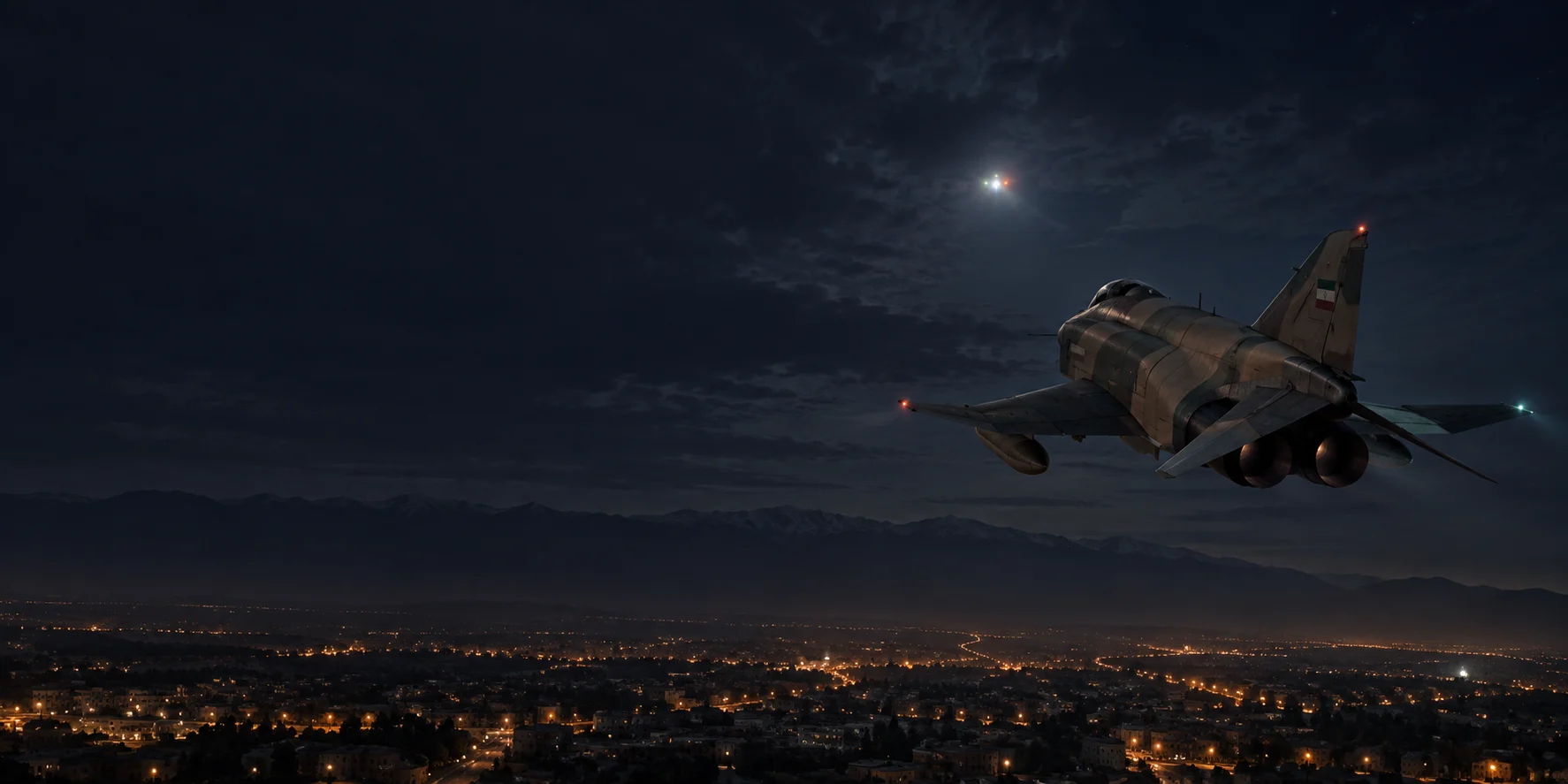
The second F-4 was closing on a light it could see from miles away.
Its radar operator had acquired a return ahead and above the aircraft. The pilot kept flying towards it. Then, according to a U.S. defense attaché’s September 1976 message, the distance stopped shrinking. The return remained roughly twenty-five nautical miles away, moving off as the fighter approached.
Another Iranian fighter had already turned back. Its crew had reported losing instruments and communications on the way in, then regaining them after changing course. Now a second aircraft was in the air above Tehran, and a sequence of lights and reported equipment failures would occupy its crew until the flight home.
It began with telephone calls.
Four calls from Shemiran
Just after midnight on September 19, the Imperial Iranian Air Force command post received four calls from people in Shemiran, north of Tehran. They reported something strange in the sky. The descriptions were uncertain: some callers likened it to a birdlike object, others to a helicopter carrying a light.
The command post contacted Brigadier General Yousefi, the assistant deputy commander of operations. The American message says he initially told a caller it was only stars. He spoke with Mehrabad airport’s tower and then looked for himself. He saw something he compared to a star, but larger and brighter.
That observation changed the response. Yousefi ordered an F-4 from Shahrokhi Air Force Base to investigate. The calls had been descriptions from the ground; the decision sent a crew towards the light from the air.
The report begins its timed flight sequence at about 1:30 a.m. The four calls are the first preserved step in a chain that would soon include aircrew, airport personnel and a search helicopter.
The first approach
The first F-4 flew towards a point roughly forty nautical miles north of Tehran. Its crew could see the light from a considerable distance; the message says it was visible from as far as seventy miles. The visual contact preceded any close approach. As the fighter came nearer, the report says, the crew lost its instrumentation, UHF radio and internal communications at a range of about twenty-five nautical miles.
The aircraft broke off the intercept and headed back towards Shahrokhi. The systems reportedly returned as it turned away.
For the crew, the practical course was to leave the approach. The light had remained visible, but the aircraft’s instruments and means of speaking to the ground or to each other had become part of the encounter. As the fighter changed direction, those systems reportedly came back.
At 1:40 a.m., a second F-4 was launched.
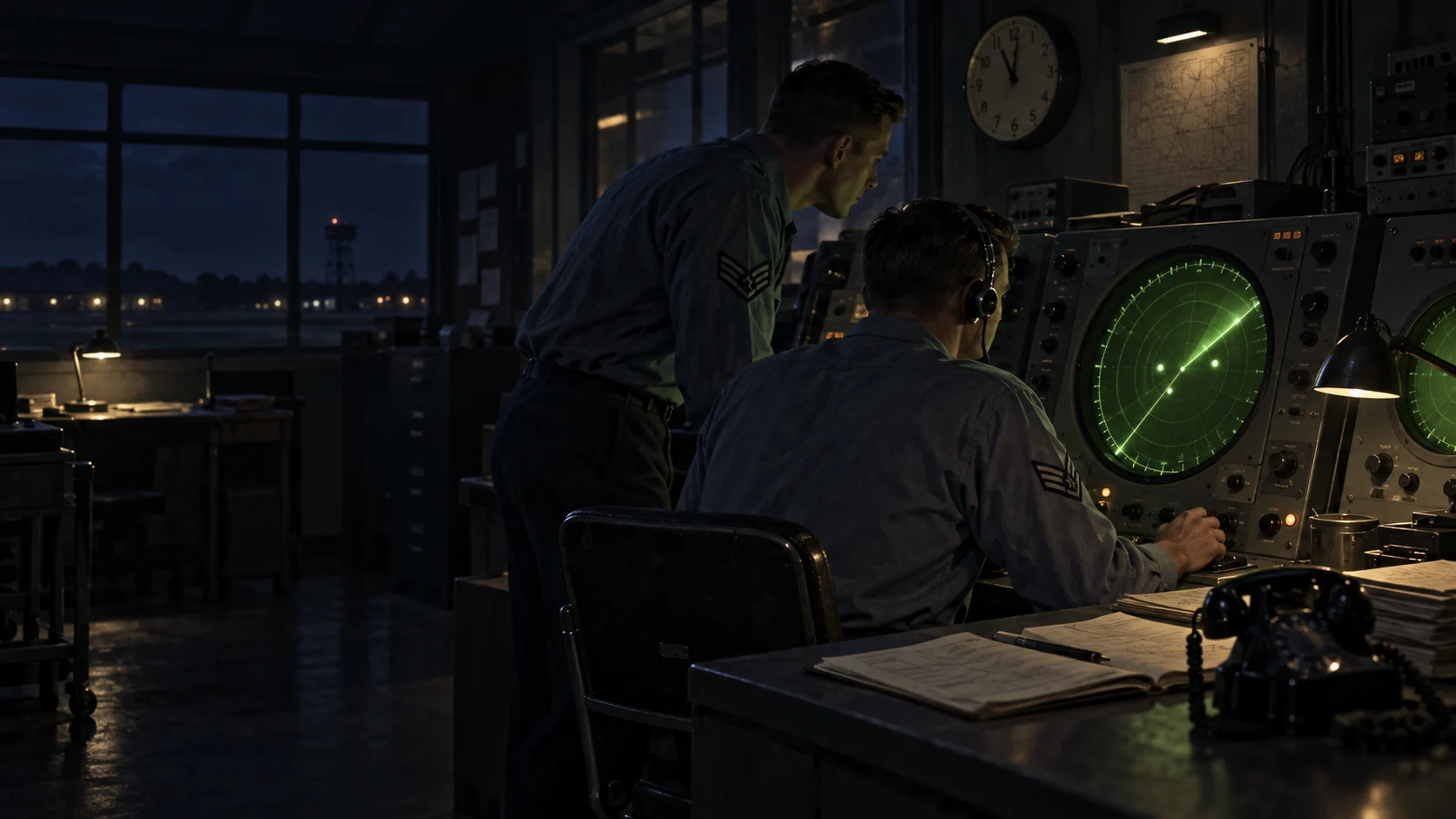
The message preserved in the U.S. National Security Agency’s release describes its radar operator acquiring a return about twenty-seven nautical miles ahead and high. The display gave a closing rate of about 150 nautical miles per hour. As the range dropped towards twenty-five miles, the return moved away and held roughly that distance on the scope. The crew had a bearing and a radar range to follow as well as a light in the sky.
The second pilot later identified himself as Parviz Jafari. In a statement made more than thirty years later, he remembered the light as too bright to let him see a body behind it. The first report, written soon after the event, likewise says the visual size was hard to judge because of its brilliance.
A return and a light
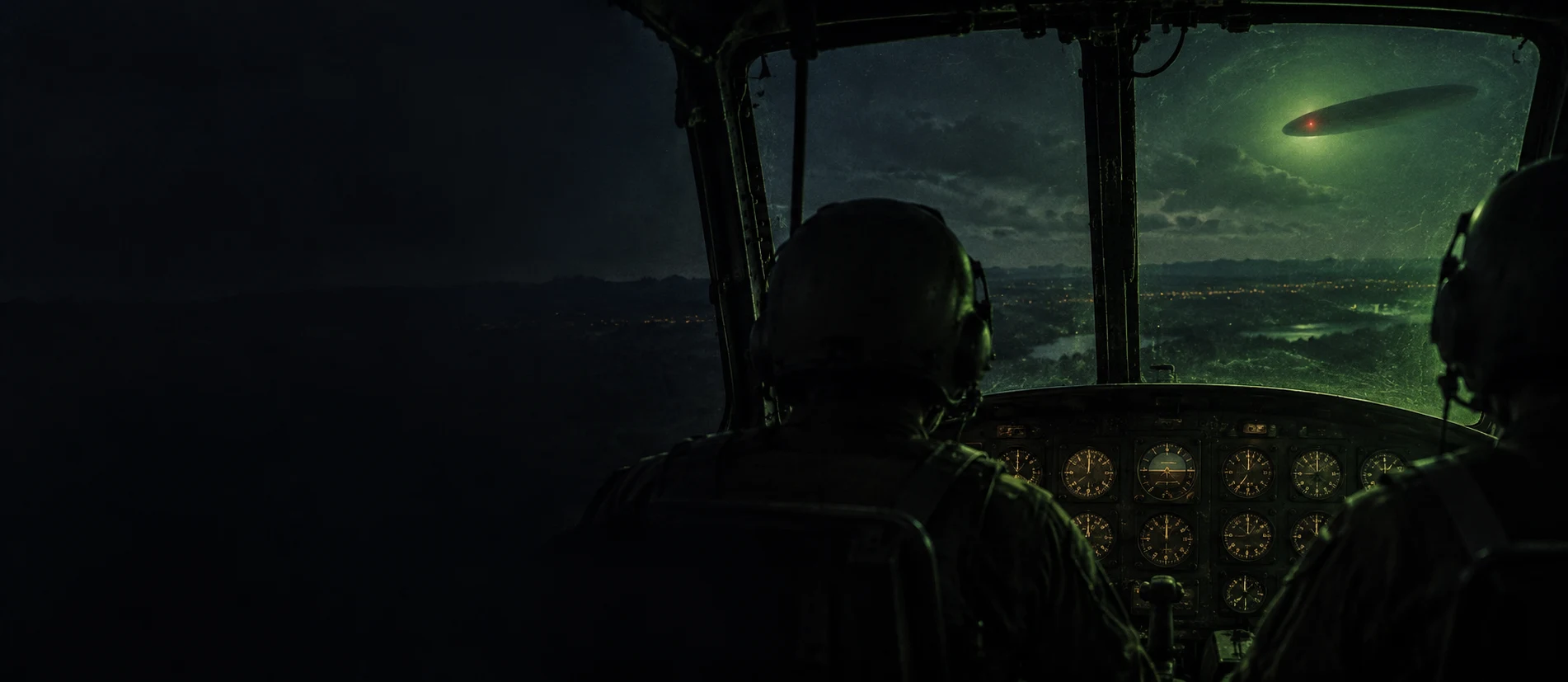
The radar operator compared the size of the return on his scope with that of a Boeing 707 tanker. That was a comparison of radar displays, not a measurement of a visible object’s dimensions. The crew’s view outside was of rapid flashes: blue, green, red and orange, arranged in what the report described as a rectangular pattern.
The F-4 continued south of Tehran with the light ahead. From the back seat, the operator could follow a radar return; from the cockpit, the pilot could see the changing colours. The report joins those observations in one pursuit, but each reached the crew through a different part of the aircraft.
Then a smaller bright light appeared to separate from the first. The crew estimated its apparent size at a fraction of the Moon’s and reported that it headed rapidly towards them.
The pilot tried to use an AIM-9 missile. At that moment, according to the report, the weapons-control panel went out, as did the UHF radio and intercom. No missile was fired. The pilot turned and dived to avoid the approaching light.
In the account sent to U.S. officials, the smaller light followed at an estimated three or four nautical miles. It moved inside the F-4’s turn and then appeared to rejoin the original light. The fighter had gone from pursuit to evasive flight; the crew had also lost communications during the manoeuvre.
Jafari’s 2007 statement recalls that he took the oncoming light for a missile and tried to fire a heat-seeking weapon. That later description conveys his perception in the cockpit. The September message is the closer record of the reported manoeuvre and the temporary loss of the weapons panel.
Down towards the ground
The crew’s communications and weapons panel came back. Soon afterward, they reported seeing another light appear to descend rapidly from the original one.
They watched it approach the ground and expected an explosion. The report says none came. Instead, the light seemed to settle and illuminate an area they estimated at two to three kilometres across.
The crew descended and marked the position. The message places their aircraft at roughly 25,000 feet before the descent and 15,000 feet afterward. From above, they could keep watching the reported glow and choose a point to revisit. The intercept had moved from a distant point in the sky to an apparent location on the ground. That position would give investigators somewhere to look in daylight.
The fighter returned towards Mehrabad airport. Its crew orbited before landing, adjusting to the darkness after the bright observations. On the approach, the report says, radio interference continued. At a particular bearing from the airport, their communications failed again and instrument readings fluctuated.
The same message says a civil airliner approaching Mehrabad experienced a communications failure in the vicinity. It did not report seeing the light. The airliner’s experience survives here as a statement within the defense attaché’s account, rather than as a separate crew report.
The last sighting
On a long final approach, the F-4 crew reported a further sighting: a cylindrical shape with steady lights at either end and a flashing light between them. They compared its apparent size with a T-33 trainer at a distance, a visual estimate made during the descent.
The crew asked the tower about other traffic. The tower reported none known in the area. Its personnel did not immediately see what the crew described. After the pilots directed them to look between the mountains and a refinery, the message says, they picked it up too.
The final observation came as the F-4 returned home. By then the crew had followed a light out of the city, turned away from another, watched a glow near the ground and seen something above its landing approach. The aircraft was back; one place beyond the city remained to be investigated.
After sunrise
In daylight, the F-4 crew returned in a helicopter to the area where they believed one light had descended. The place they had marked was a dry lake bed. They noticed nothing at that spot.
Circling farther west, they picked up a beeping signal that seemed strongest near a small house with a garden. They landed and spoke to the people there. The residents described hearing a loud noise during the night and seeing a bright light like lightning.
The September message ends with the aircraft and area being checked for possible radiation, and a promise to forward more information when available. The night had sent people into the air twice; daylight brought them back over the ground the crew had marked.
By then the night had left several different kinds of trace: calls from Shemiran, an order to scramble two fighters, aircrew descriptions of lights and radar returns, reported interruptions to equipment, and a daylight search that did not find a visible object at the marked place.
What Is Known
The main surviving account is a September 1976 message prepared by the U.S. defense attaché in Tehran and preserved in the Defense Intelligence Agency’s reading room. The National Security Agency also hosts a copy and a 1978 verbatim reprint. These preserve the same account, not independent confirmations. The message reports the calls, two interceptions, an airborne radar return, equipment interruptions, other observations near Mehrabad and the following day’s helicopter search.
The report relays what Iranian personnel told U.S. officials. It does not include the four original telephone calls, raw radar data, individual aircraft maintenance findings or a separate report from the civil airliner. Its radar-size comparison describes an echo on a screen, not the physical size of an identified object. Its account of the daylight search records no visible trace at the spot the crew selected, gives no result for the proposed radiation check, and does not identify the source of the beeping signal. It does not establish whether the shape reported on final approach was related to the earlier lights.
Jafari’s November 2007 statement is a firsthand account given decades later. He identified himself as the second pilot and described more separate lights than the September message specifies. He also placed the initial civilian reports around 11 p.m. on September 18, whereas the earlier message placed the calls after midnight on September 19. The timed sequence here follows the earlier account; his later recollection retains its own date.
The record establishes that an unusual observation prompted a military response and was reported through official channels. It preserves claims of radar contact and systems failures without independently demonstrating what caused them or what the crews saw.
The Bigger Picture
The fighters belonged to an air force being built around U.S.-supplied aircraft and training. A 1972 U.S. State Department memorandum recorded dozens of F-4 Phantoms already in Iranian service and plans to expand the fleet. It also described the relationship between Iran’s military ambitions, American equipment and technical support. Four years later, an unexpected report above Tehran reached Iranian commanders and then a U.S. defense attaché.
That route through the institutions is part of the case. Civilian callers prompted a commander to look up; his decision sent out an aircraft; its return led to a second launch. Radar operators, pilots and tower staff contributed different observations. The resulting American message kept them in sequence, while leaving the underlying cause unresolved.
In its 2023 independent study of UAP research, NASA stressed the importance of calibrated observations and usable data. The study did not investigate Tehran. Its broader point helps explain both the strength and the limit of a case like this: a detailed contemporary report lets us follow the decisions and experiences, while the surviving record cannot replay the instruments or test every possible connection between a light and a failure.
The first fighter turned away. The second followed the light, then turned away from something that seemed to come towards it. What remains most vivid is that change of direction above a city whose residents had begun the night by calling to say they could see something strange.
Sources
- U.S. Defense Attaché Office, Tehran, reported UFO sighting, September 1976. Contemporary message in the DIA FOIA reading room, relaying accounts from Iranian military and airport personnel; the principal chronology for this article.
- U.S. National Security Agency FOIA release. Joint Chiefs of Staff copy of the same Tehran message; archival copy, not independent witness evidence.
- International UFO Reporter, 1978. Verbatim reprint of the September 1976 message, hosted in the NSA FOIA archive; a readable reproduction of the same document, not separate corroboration.
- Parviz Jafari, November 12, 2007. Statement distributed at a National Press Club briefing; later firsthand recollection of the second interception, reproduced from the material distributed to attendees.
- U.S. Department of State, 1972. Foreign Relations of the United States memorandum on Iran’s military position; independent historical context for Iran’s F-4 fleet and U.S. military relationship.
- NASA, 2023. Unidentified Anomalous Phenomena Independent Study Team Report; independent research context on what observational data can establish, not an investigation of Tehran.