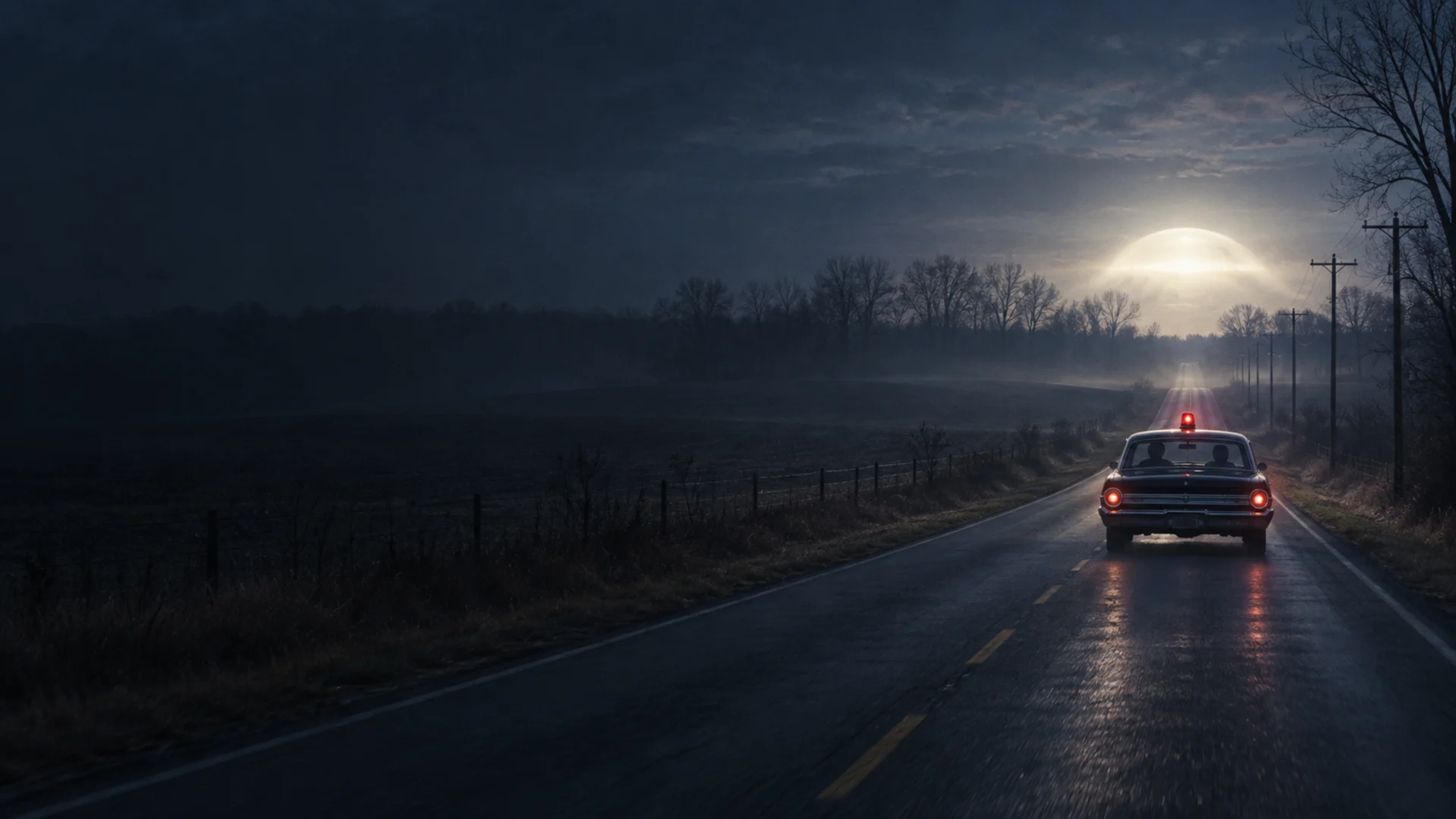
The speeding car got away. On April 24, 1964, Socorro police officer Lonnie Zamora was driving south in pursuit when he heard a roar and saw a flame beyond the hills to his southwest. He knew there was a dynamite shack in that direction. An accident there mattered more than the traffic stop, so he turned onto a gravel road to investigate.
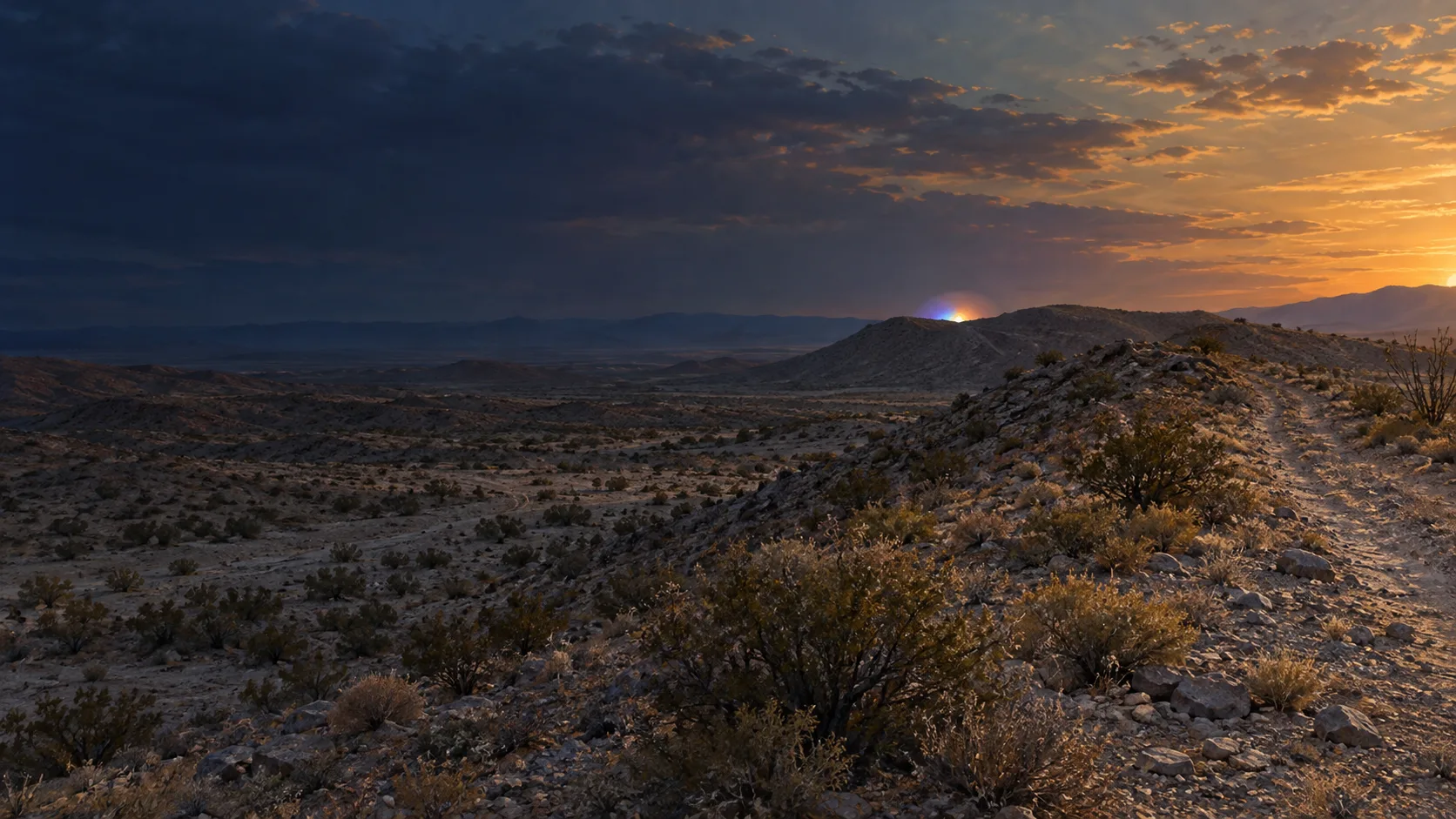
The car struggled up the loose slope. At the top, Zamora saw something bright down in an arroyo. He first took it for an overturned automobile. He would later tell the U.S. Air Force that, within moments, he saw an oval, aluminum-colored object and two small figures beside it. He radioed that he was checking a possible wreck, drove farther, stopped and got out. The hill briefly hid the scene. Then the roar returned.
That sequence comes from Zamora’s account, preserved in the Project Blue Book case file and reproduced in an article by Blue Book chief Hector Quintanilla Jr.. The person who came next did not see an object leave. He did find a shaken officer, burning brush and marks in the soil. Socorro’s enduring question lies in the distance between those two kinds of evidence.
The road to the arroyo
Zamora’s turn from the highway was a decision made for an ordinary reason. The noise and flame suggested an explosion; the dynamite storage shack offered a possible source. In Quintanilla’s 1966 retelling of the investigation, Zamora described the flame as bluish with orange near its base. He saw no smoke attached to it. The road was so loose that his patrol car needed several attempts to crest the hill.
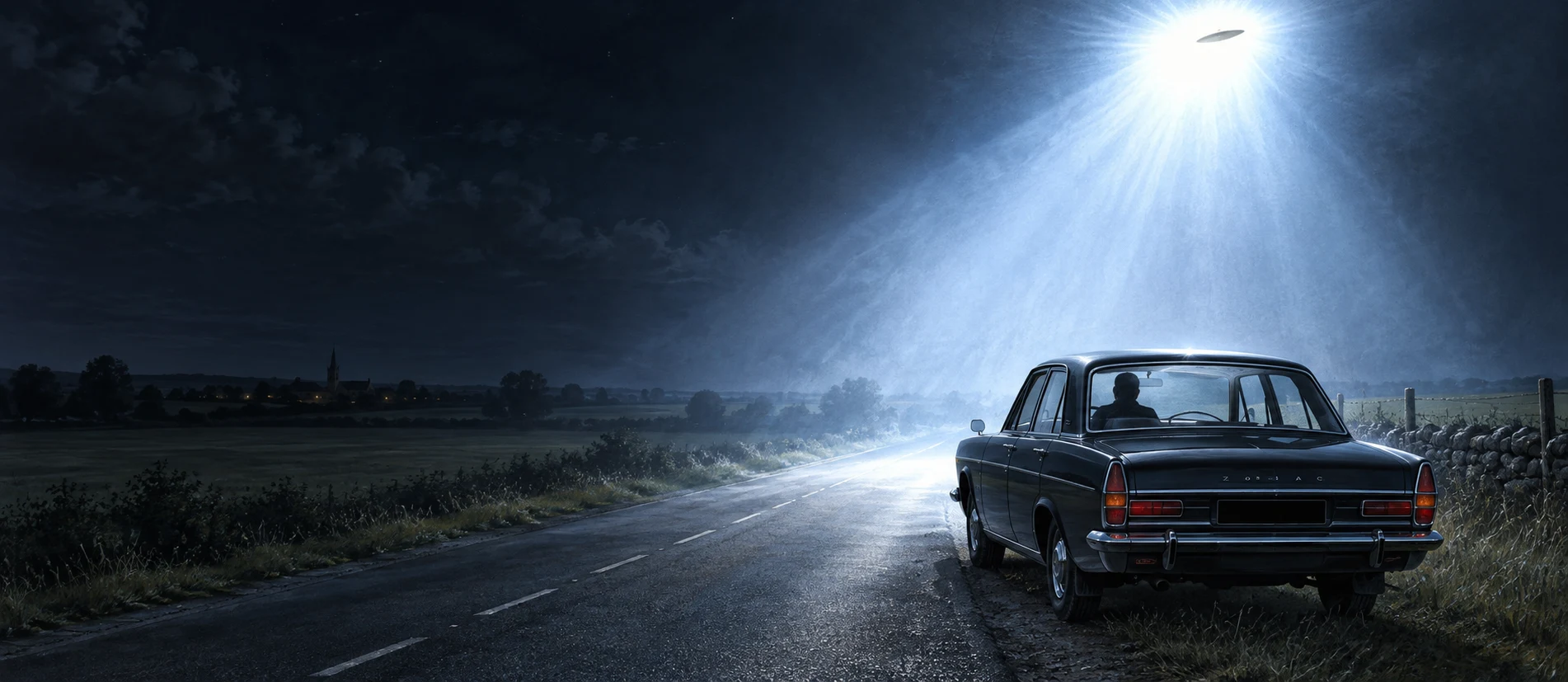
From that crest, the object appeared roughly 150 to 200 yards away. Its pale surface made Zamora think of a car turned over in the arroyo. At that distance, he reported seeing what looked like two people in white near it. The brief glimpse became one of the most repeated parts of the story, often retold as an encounter with occupants. The contemporary case file supports the more limited description: a distant impression of small figures. Zamora did not speak to them or see them enter the object.
He drove along the hilltop while calling the station. By the time he stopped, the ridge blocked his view of the object. He dropped the radio microphone as he got out, picked it up and began to move toward the arroyo. According to the statement reproduced by Quintanilla, a loud, rising roar began before he reached it. Zamora saw a light blue flame, orange below, and dust in the area of the object. He thought it might explode.
He ran back toward his car, hit it as he fled and continued past it. Looking back, he said he saw the object rising above the place where it had been. He dropped down behind the edge of the hill and covered his face. When the roar stopped, he heard a brief high tone. He looked again and reported that the object was moving away, low over the ground and then into the distance. He saw no flame or smoke during that final passage.
These movements matter because the observation was broken up. Zamora saw the scene first from a distance, lost sight of it behind the ridge, encountered the noise and flame from a different position, and watched the final departure while running and taking cover. His statement is detailed. It is still a sequence of glimpses by one person, not a continuous recording of an object on the ground.
What Chaves could see
Zamora radioed dispatcher Nep Lopez and called New Mexico State Police Sergeant Sam Chaves to the location. Back at the arroyo, Zamora saw brush burning in several places. The Air Force account says Chaves arrived soon afterward, noticed Zamora’s pale appearance and went down with him. Chaves pointed out shallow impressions in the ground.
Chaves is an important second observer, though his evidence is sometimes stretched. He did not report seeing the airborne object or the two figures. He could inspect the scene immediately after Zamora said the object had gone. This distinction preserves the value of his observations without turning him into an independent witness to the flight.
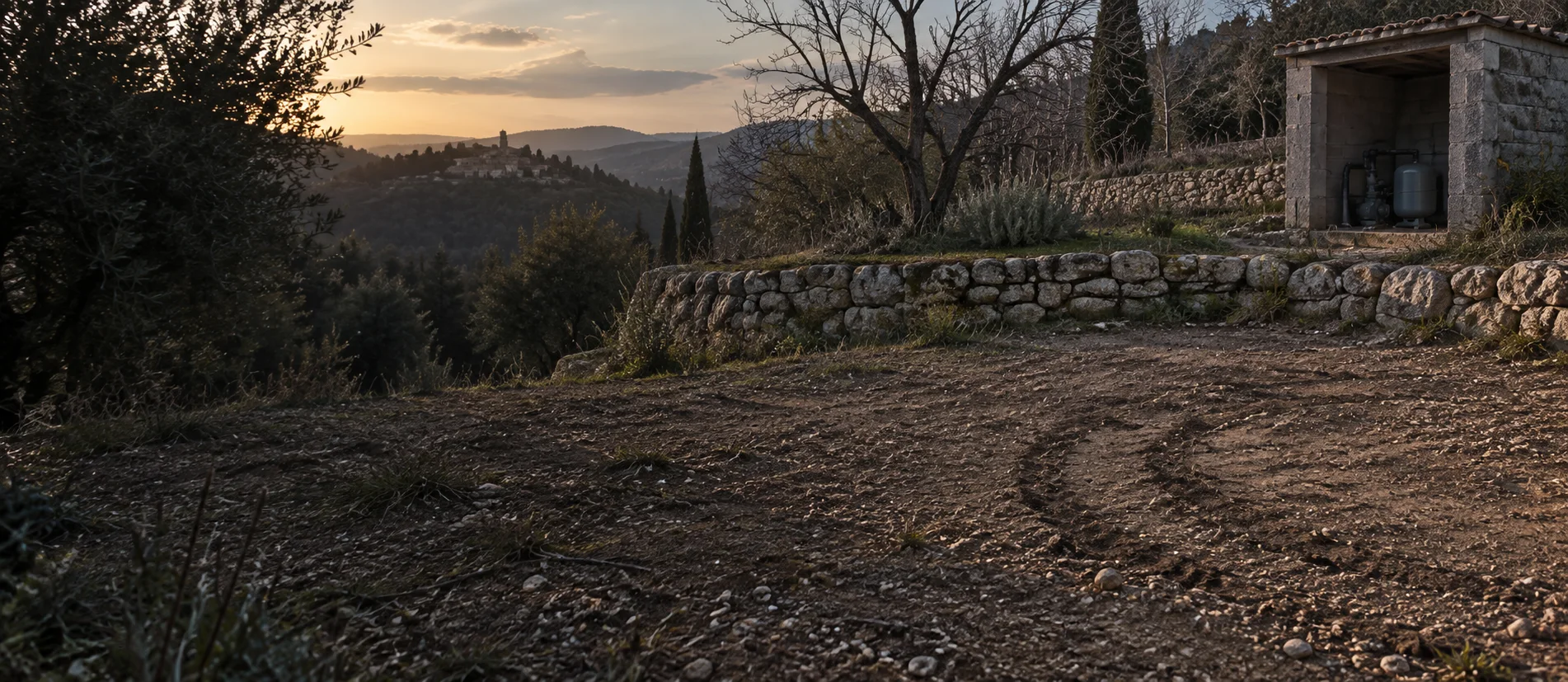
The marks and vegetation gave the investigators something to examine. Air Force personnel recorded a pattern of shallow impressions, scorched or burning brush, and the location of the alleged landing. In a 1968 statement to a U.S. House symposium, biologist Frank B. Salisbury described four ground impressions and burned bushes. He regarded the case as unusually detailed, but also identified its central weakness: Zamora alone had seen the object. His account of the marks was part of a later assessment of the already documented scene, not a second sighting.
The impressions are commonly called landing-gear marks. That name contains a proposed explanation. The observations were depressions in soil near where Zamora said the object had stood. Investigators could record their position and shape. Without an identified object or a recorded moment when the marks were made, the depressions could not by themselves establish what pressed into the ground.
A case moves through Blue Book
The report drew local and federal investigators. The Blue Book file gathers witness statements, site sketches, photographs, correspondence and tests rather than a single tidy verdict. Project Blue Book was the Air Force’s programme for collecting and evaluating UFO reports; its files are now held by the U.S. National Archives. Socorro entered that system as an apparent close-range report with a physical scene that could be visited.
Investigators checked ordinary aerial activity. Quintanilla wrote that the Air Force asked about weather balloons, helicopters, government and private aircraft, and activity at Holloman Air Force Base and White Sands Missile Range. They contacted companies working on lunar vehicles. Those checks were especially relevant near a missile range: an unfamiliar test machine would have offered a possible explanation without requiring a visitor from elsewhere. The inquiries, as Quintanilla reported them, produced no matching vehicle.
The physical checks were similarly inconclusive. Air Force laboratory analysis found no foreign material in soil from the site. Radiation readings at the impressions and nearby ground were normal. Analysis of burned brush found no chemical residue that identified a propellant. Quintanilla also reported no unusual radar return, while noting that the down-range radar closest to Socorro had shut down earlier that afternoon. Those results narrowed some possibilities. They did not identify the source of the flame, the noise or the marks.
No independent witness to the object’s departure was located in the investigation Quintanilla described. This is not a claim that the town had no one outdoors that afternoon. It is the evidentiary limit of the inquiry: the case file could not match Zamora’s reported flight to another observation or instrument track. The later photographs are photographs of the site, not of the object. Their existence gives the ground scene a paper trail while leaving the central sighting with one witness.
The unsolved entry
Quintanilla was hardly predisposed to endorse extraordinary explanations. Yet he listed Socorro among Blue Book’s unidentified reports. In his 1966 account, he called Zamora reliable and said the investigation had failed to find a vehicle or other cause for what had frightened him. That is a striking admission from the person directing the official programme. It is also narrower than a finding that Zamora saw an alien craft.
The label unidentified is sometimes used as if it were the object’s identity. Blue Book used it when a report had enough information to investigate but could not be correlated with a known object or phenomenon. The National Archives’ account of the programme records that 701 of 12,618 reports ultimately remained in that category. The Air Force did not treat the category as evidence of extraterrestrial vehicles.
For Socorro, a conventional device or local deception has been proposed many times. The documented checks did not establish either one. That leaves room to ask what was missed: whether a test was incompletely disclosed, whether the marks had another cause, or whether a brief and frightening sequence of sights and sounds was misinterpreted. The surviving file does not demonstrate any of those routes from start to finish. Replacing an unexplained account with an unsupported answer would repeat the same error as treating the account as proof of a spacecraft.
What the record establishes
Zamora reported the event promptly and gave investigators a detailed route, sequence and location. Chaves saw him shortly afterward and helped examine the scene. Multiple investigators recorded depressions and damaged vegetation. That makes Socorro more substantial than an anonymous sighting recalled decades later. Its immediate documentation is the reason it still merits attention.
It does not turn every element into independent evidence. The two figures, the oval surface, the red marking and the object’s departure all come from Zamora’s observation. The marks and scorched plants were observed by others, but their cause was not recorded as it happened. The laboratory work found no material that could tie them to a particular machine. Radar offered no confirming track. Those are distinct limits, and they matter more than the number of pages in the file.
The best supported conclusion is that Zamora reported a close, alarming event; responders found an altered patch of ground; and a serious Air Force inquiry did not determine what produced the report. It is reasonable to call Socorro unresolved. It is not possible from this record to say what vehicle, if any, was in the arroyo.
The Bigger Picture
Socorro shows the difference between a prompt investigation and a complete evidence trail. Police and Air Force personnel got to the scene, mapped it and sent samples for analysis. They had more to work with than a distant light in the sky. Yet the decisive interval—the moment when the alleged object occupied the ground and departed—was observed by one person and captured by no instrument known to the investigators.
The problem remains familiar in modern UAP research. NASA’s independent study team stresses the value of calibrated sensor data, reliable timing and contextual information when trying to identify an unusual event. A careful witness report is a starting point. It cannot supply measurements that were never made, and physical traces are most useful when their formation and collection can be linked securely to the event.
The most durable image from Socorro may be the officer turning off the road because he thought someone might be in trouble. His choice brought investigators to an arroyo before the evening was over. Their work preserved a genuine mystery in the record: a reported object, an observed scene, and no demonstrated bridge between them. A contemporaneous image, independent flight track or material tied securely to the departure would have changed what they could conclude. None appears in the surviving file.
Sources
- U.S. Air Force, Project Blue Book Socorro case file, 1964 and subsequent investigation (168-page archival scan)
- Hector Quintanilla Jr., “The Investigation of UFO’s,” Studies in Intelligence, 1966 (CIA-hosted PDF)
- Frank B. Salisbury, statement to the U.S. House Symposium on Unidentified Flying Objects, 1968
- U.S. National Archives, Project Blue Book research guide
- NASA, UAP Independent Study Team Report, 2023