The cow’s tracks led into the snow and stopped beneath the trees.
That was how Terry Sherman described one of the disappearances. In David Perkins’s interview, published in 1997, the rancher recalled searching everywhere and contacting the people around him. Near the last hoofprints, fresh branches lay in a circle. He believed they had fallen from the trees above.
The animal was missing.
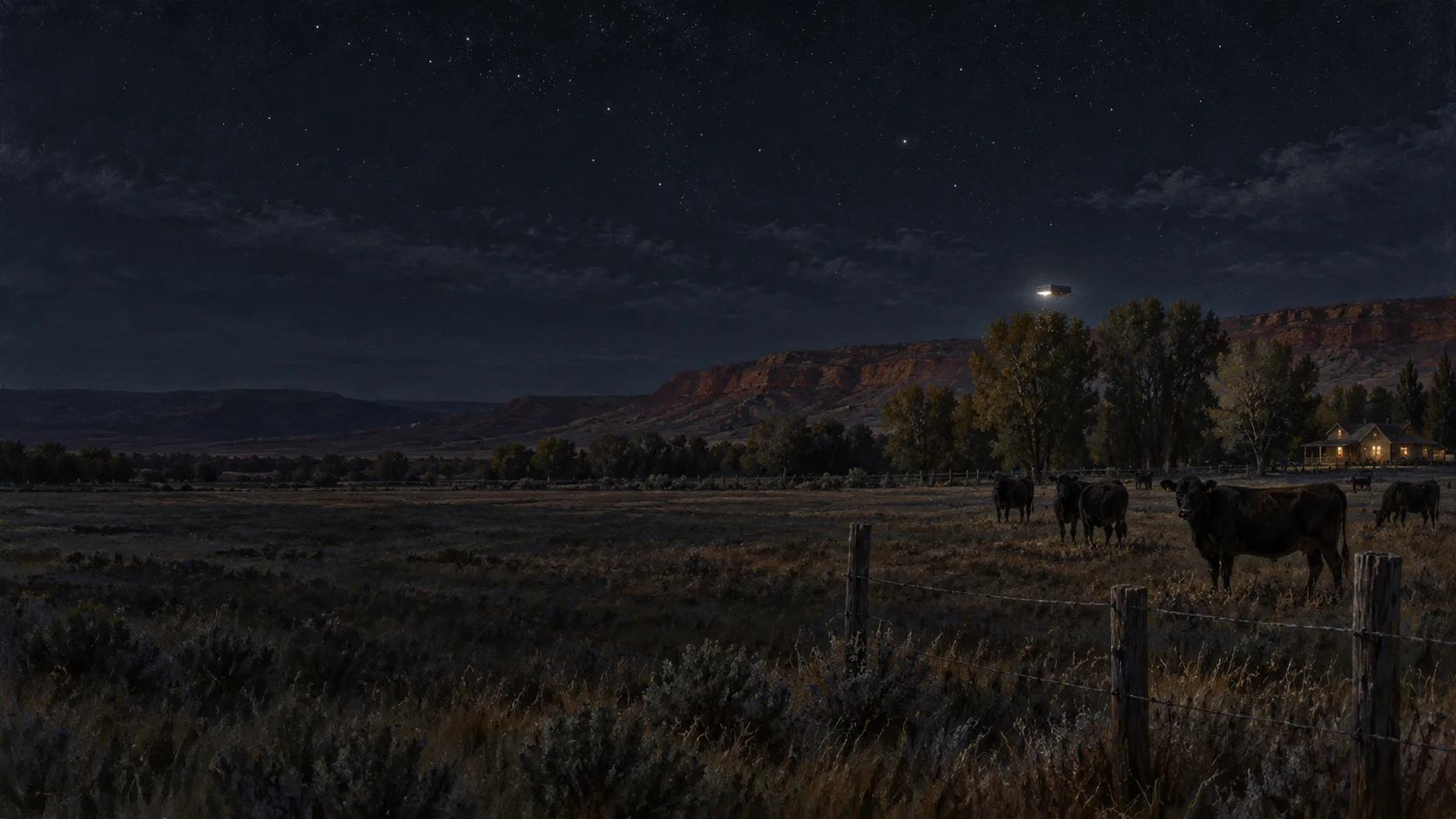
For the Sherman family, the vanished cattle belonged to a larger sequence of unsettling reports from their Utah property in 1995–96. Lights crossed the fields. Cows were found dead. Others could not be found at all.
Before the place became famous as Skinwalker Ranch, it was a family’s working ranch—and they wanted help.
Above the poplars
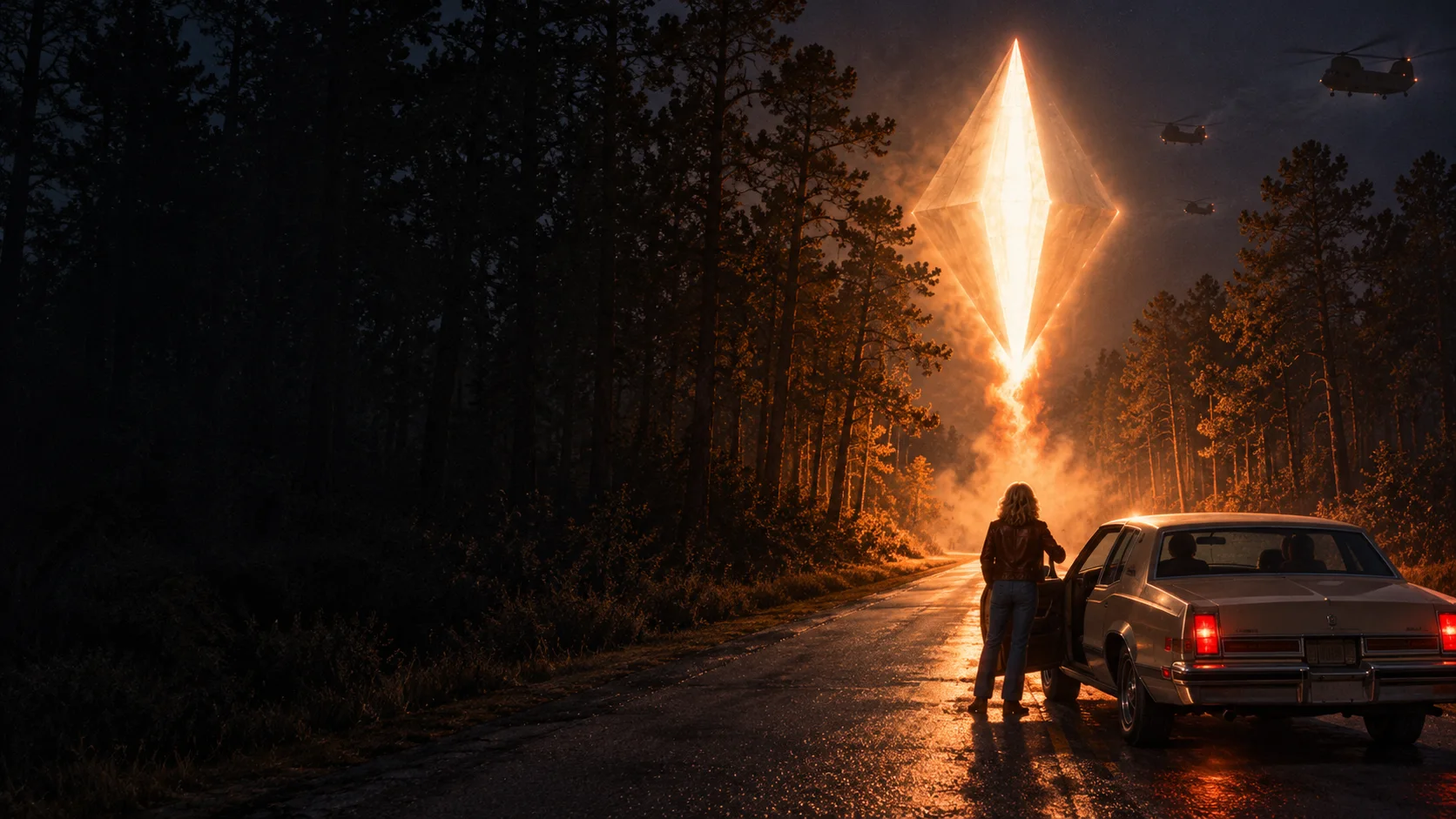
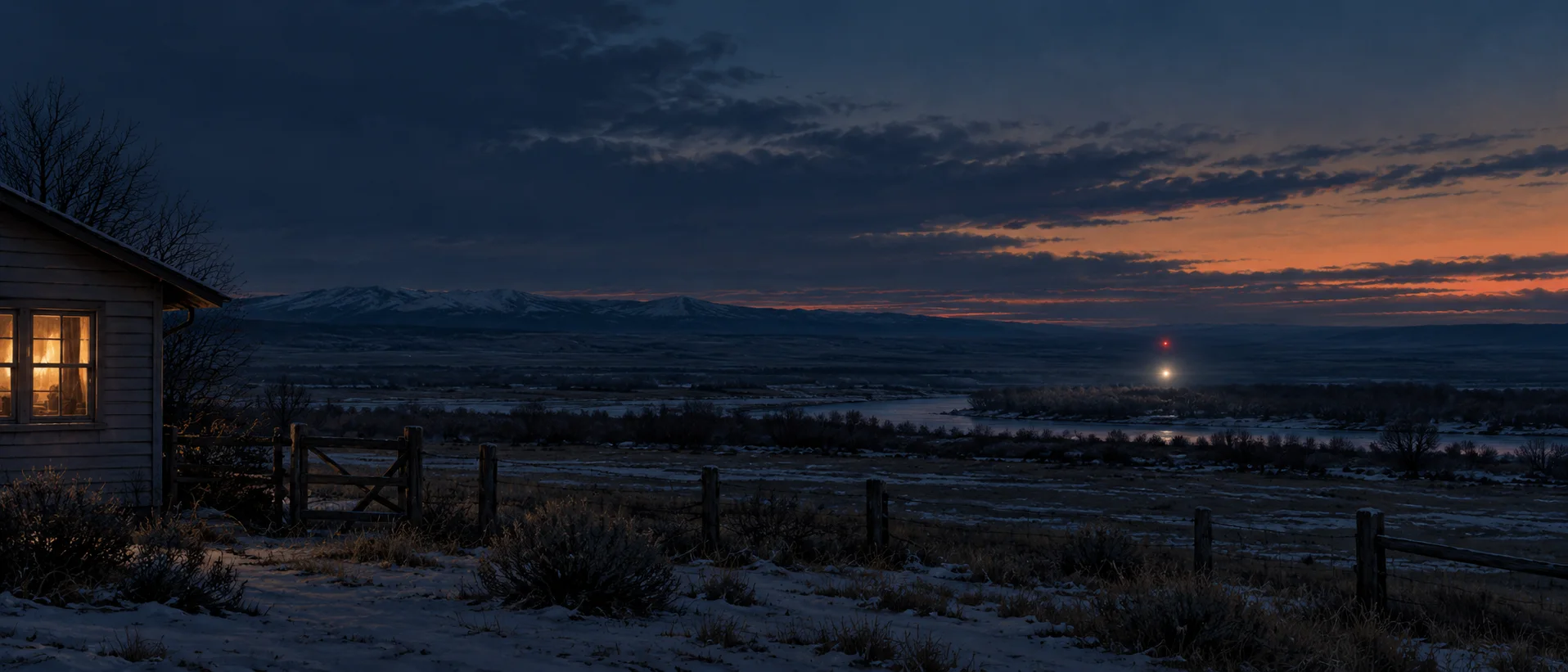
In April 1995, Terry went outside to check a calving cow. Lights in the field initially suggested something ordinary: perhaps neighbours riding recreational vehicles.
Then the object passed over the poplar trees.
In his June 1996 account to the Deseret News, their height was what changed his understanding of the sight. Whatever he was watching was above trees forty or fifty feet tall.
Gwen subsequently described lights resembling separated headlights and a red glow that illuminated the hillside. The familiar landscape had become the backdrop to something neither could identify.
Among the cattle
Perkins’s account records Terry’s examination of two dead cows. Each, he said, had a small hole in its left eye. He noticed an unusual chemical smell and used a wire to explore the opening.
The June newspaper report described a third animal, found in January near trees at a field’s edge. The Shermans’ son reportedly had seen it alive minutes earlier. The family described a substantial wound extending into its body and no blood visible on the snow.
By June, they were reporting three dead cattle and four missing. They associated the losses with the sightings.
Someone to tell
The June newspaper story brought the family’s account beyond the basin.
Christopher O’Brien later recalled receiving a call from its reporter, Zack Van Eyck, who knew of his work with ranchers and unusual livestock deaths. O’Brien travelled to meet Terry.
His recollection, published in 2017, describes sitting beneath cottonwoods and taking notes while the rancher talked. Terry asked whether he knew anyone who would buy the property and investigate what was happening there.
O’Brien suggested Laurance Rockefeller and Robert Bigelow. He also contacted Perkins, who interviewed Sherman before a later confidentiality agreement restricted further discussion.
The family was looking for a way out that might also bring someone willing to examine the reports.
The dogs do not return
Accounts of the final summer added another disappearance.
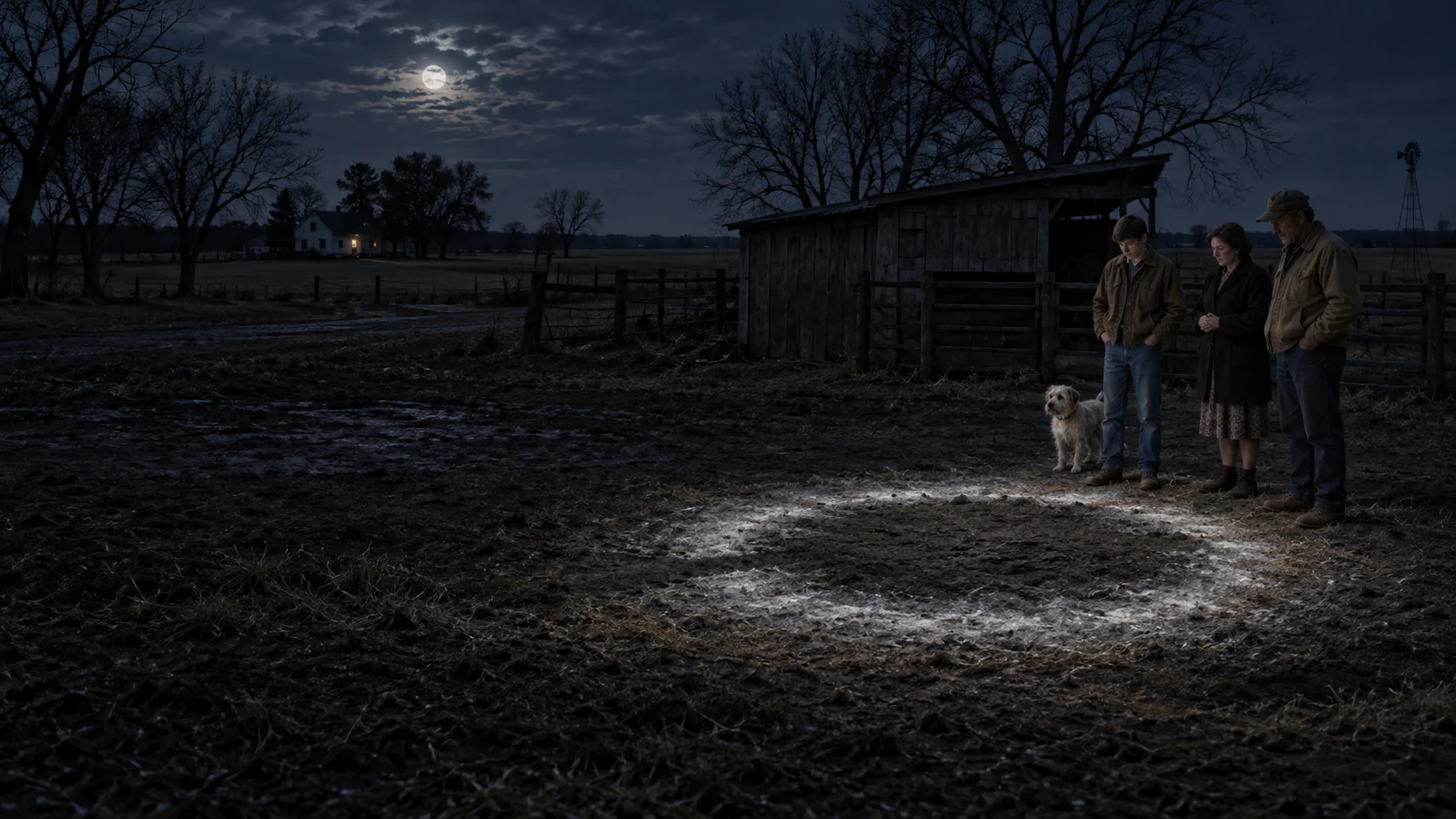
An April 1997 newspaper follow-up described the Shermans’ report of a small flying ball of light near the house. Their three dogs chased it into the woods. The family heard a yelp, but the animals did not come back.
The next morning, they said, they found three burned circles in the same area.
That follow-up linked the loss of the dogs with the decision to sell. The animals had left their sight in pursuit of a light; the family subsequently described marks on the ground where they had searched.
A different kind of watch
Bigelow bought the ranch in September 1996, for approximately $200,000. By October’s reporting, the Shermans had moved to a smaller property near Whiterocks. Terry remained employed to help maintain the former ranch.
Bigelow’s National Institute for Discovery Science established an observation building and stationed scientists and a veterinarian there. Someone would be present around the clock.
John Alexander, speaking for the institute, described an effort to obtain hard data through conventional scientific work. Local veterinarian Dan Dennis was approached about examining future unusual livestock deaths.
The sale also changed who could talk. Sherman said that a nondisclosure agreement prevented him from discussing the activity. Other researchers worried that information would remain private.
The ranch had gone from a family’s home to a place where observers waited for the next report.
Cameras at the gate
Television followed. In late November, a Strange Universe crew came to the area to interview witnesses, researchers and a veterinarian for a December broadcast.
Lezlee Whiting’s contemporary report records the crew’s attempt to cover the mystery through competing viewpoints. Bigelow’s employees declined interviews.
By April 1997, Alexander told the newspaper that the researchers had not observed the dramatic craft or dog-related events they had expected. They would remain on the property.
The family had left. The watching continued.
What Is Known
The dated newspaper reports preserve the family’s descriptions, the sale and the first investigation. Perkins’s 1997 article supplies another interview with Terry; O’Brien’s account of his visit was written much later. These sources record testimony, not independent proof that UFOs caused cattle deaths or disappearances.
The December report also records a veterinary assessment of one subsequent livestock case, which was not attributed to mutilation. It does not identify that animal as one of the Shermans’ original three dead cows.
The changing reports matter. Alexander’s April 1997 statement described little significant activity; in August 1998, Bigelow said unusual aerial activity and animal deaths had continued. Neither statement establishes an extraordinary cause.
The Bigger Picture
The 1998 interview presents Bigelow’s project as an attempt to investigate a recurring location instead of arriving after an isolated sighting. He invited regional residents to report unusual deaths so veterinarians could respond and examine the animals. He also said that firm conclusions remained premature.
That change—from retrospective accounts to people waiting on site—is the important historical turn in the Sherman story. A family’s search for answers attracted money, personnel and continuing observation. It also placed much of the subsequent record behind private control.
The early case remains smaller and more specific than the legend that followed: lights over familiar fields, livestock missing from the herd, and a rancher following hoofprints to a place where he said they ended.
Sources
- Zack Van Eyck, “Frequent Fliers?”, June 30, 1996. Contemporary interviews and initial public reporting.
- David Perkins, Spirit, volume 10, number 1, 1997. Archived transcription of his Sherman interview.
- Christopher O’Brien, “Skinwalkers and the Witchery Way,” 2017. Later firsthand recollection of his 1996 visit.
- Van Eyck, “Millionaire Leads Quest for UFO Data,” October 20, 1996. Contemporary reporting on the sale and NIDS.
- Lezlee E. Whiting, “‘Universe’ Reports on Strange Utah Occurrences,” December 12, 1996. Television coverage and veterinary context.
- Van Eyck, “No UFOs or ETs Have Dropped In at Spooky Ranch,” April 27, 1997. Follow-up interviews and the reported dog disappearance.
- Van Eyck, “Private UFO Study Takes a Public Turn,” August 10, 1998. Interview with Bigelow; context for the later private investigation.