The first thing that drew their attention was the water.
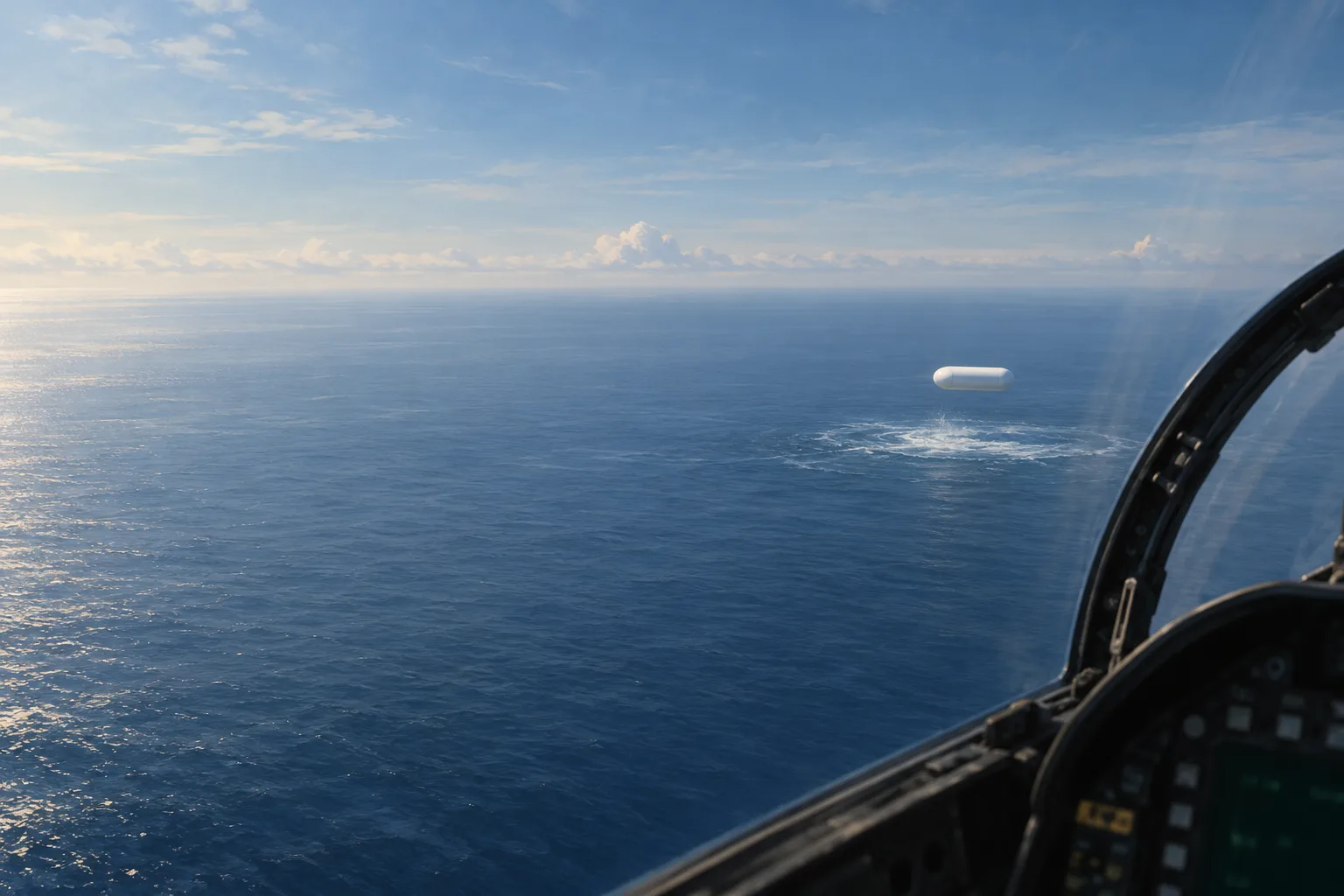
Below the two Navy fighters, a patch of white stood out against the blue Pacific. Commander David Fravor later described an unusually clear day, with light winds and a calm sea. The disturbance gave the four aircrew somewhere to look.
Something white was moving above it.
It had an elongated, rounded shape. Fravor could see no wings or rotors, and nothing that explained how it remained airborne. The object would become known as the Tic Tac, after the small white mint whose shape it seemed to resemble.
The date was November 14, 2004. The fighters had launched from USS Nimitz for training off Southern California. Now one aircraft would stay above the scene while Fravor descended towards something neither crew had expected to find.
A different assignment
Fravor commanded Strike Fighter Squadron 41, the Black Aces. The carrier group was conducting workups, preparing its ships and aircrews for deployment. His flight’s planned task was a two-against-two air combat exercise, with the cruiser USS Princeton providing control.
In his 2023 congressional testimony, Fravor recalled the change coming as the aircraft were joining up. The training was suspended. They were being sent on a real assignment.
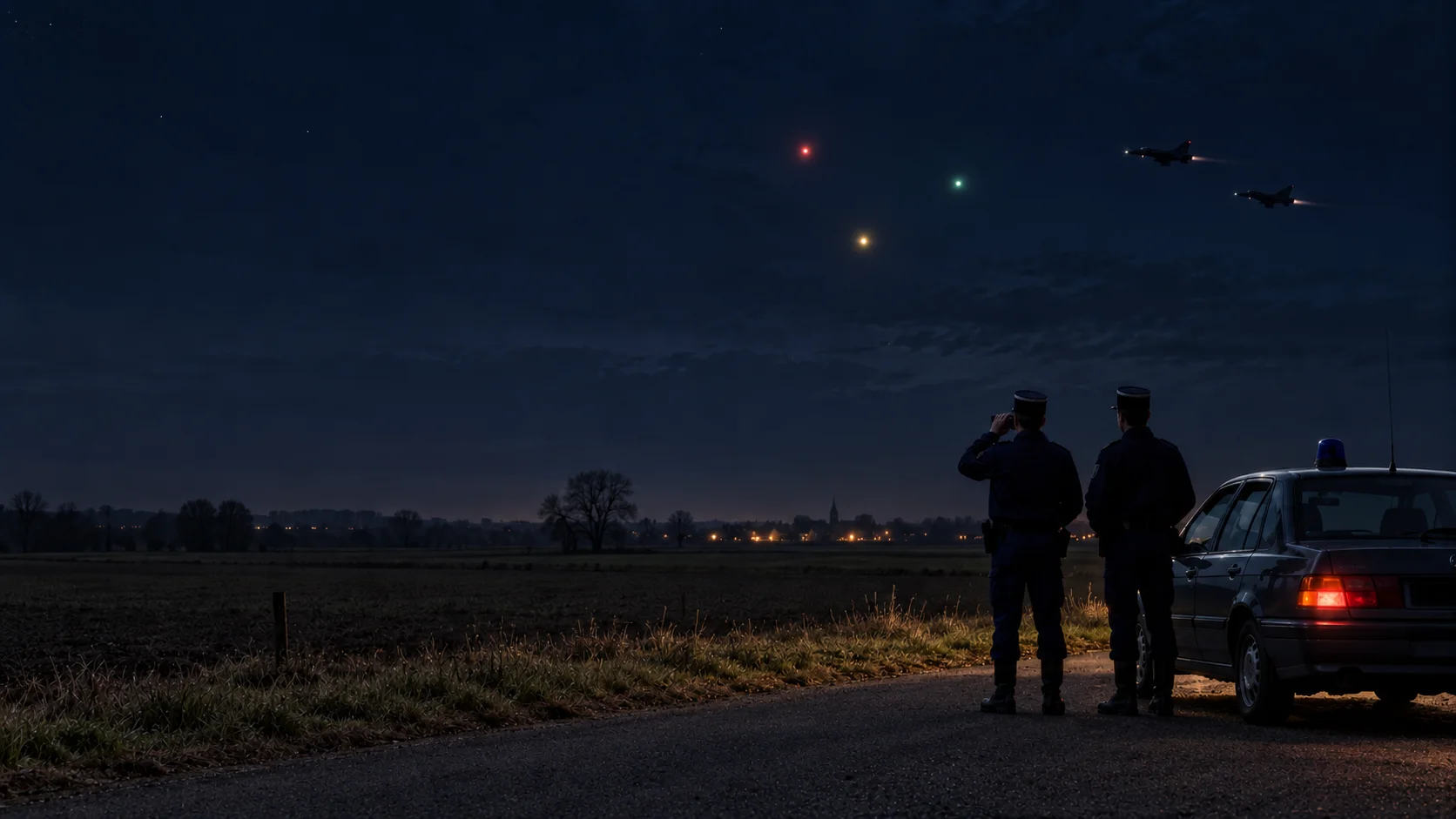
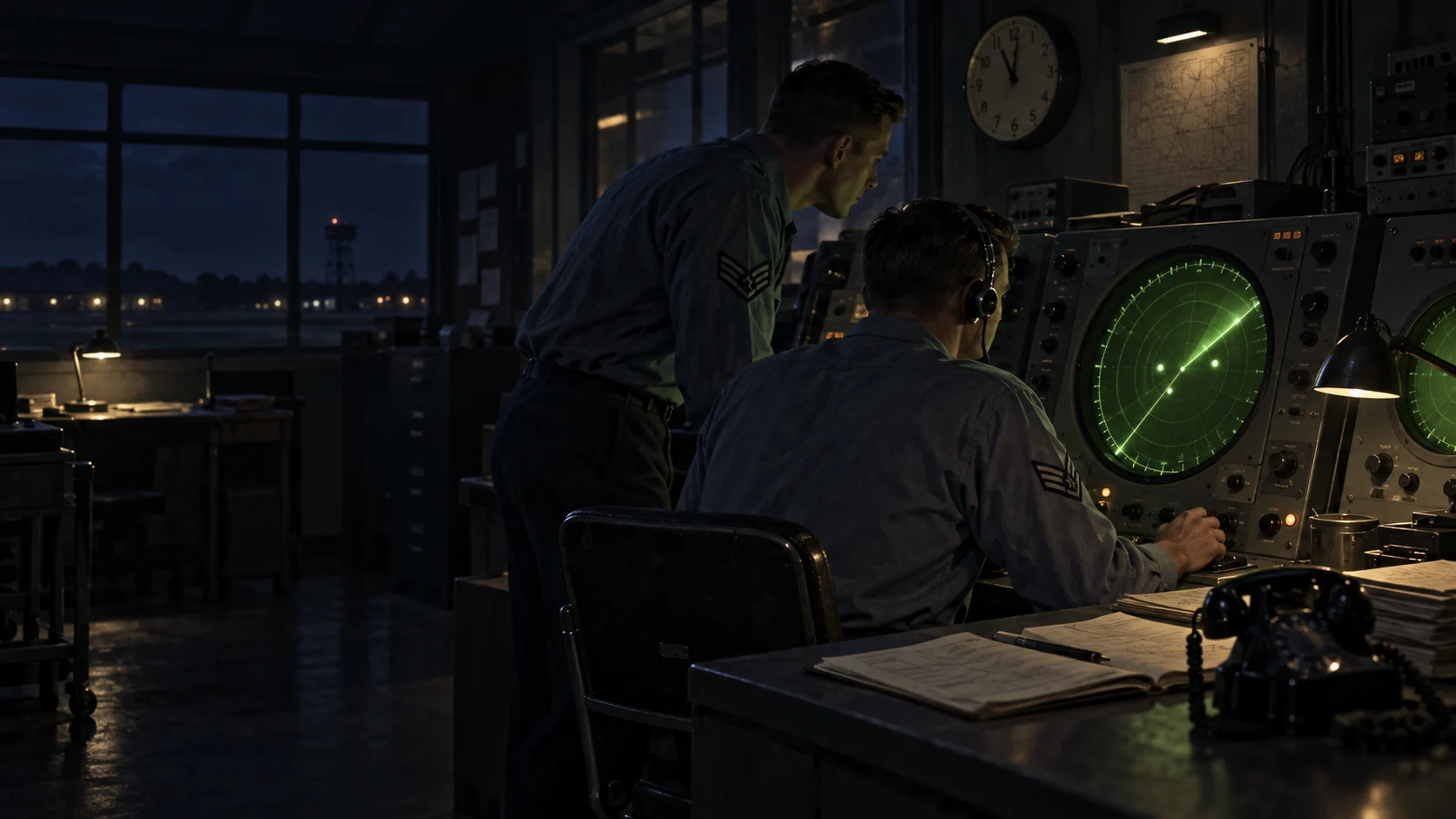
The controller directed them west and counted down their distance to a contact. Fravor said the controller also described unusual objects that had been appearing on the ship’s system over the preceding weeks: descending from very high altitude, remaining lower down for hours, then climbing again.
The pilots were being sent to put eyes on something the ship had been tracking. They did not yet know what it would look like. From the cockpit, the task began as a direction, a distance and another voice guiding them towards a point over the ocean.
They reached the reported position at approximately 20,000 feet. The controller called a merge plot: the aircraft and the contact were close enough on the display to fall within the same radar resolution cell.
The crews looked around. Off to their right, below them, was the white water.
The mark on the sea
Fravor’s aircraft carried a weapons systems officer in the rear seat. So did the second F/A-18F, flown by Alex Dietrich. There were four people in two cockpits, each with a view into the area the controller had directed them towards.
Dietrich later described the disturbance as the detail that helped her acquire the object. In a Somewhere in the Skies interview, reissued in 2025, she recalled initially thinking that whatever they had been sent to intercept might have crashed. For a moment, the assignment seemed about to become a search and rescue operation.
Then she saw the Tic Tac cross the disturbed water. The contrast helped her pick it out. The sea had given her a reference against which to notice its erratic movement.
Fravor described the object’s long axis as pointing north–south, with abrupt movements above the surface. He estimated its length at roughly forty feet. It was a visible shape in daylight, with none of the lifting surfaces he expected on an aircraft and no rotor wash beneath it.
The white patch and the white object occupied the same small part of an otherwise expansive view. The crews had reached their assigned position; now the question was how to approach what they could see there.
One aircraft goes down
Fravor and his weapons systems officer decided to descend. Dietrich’s aircraft remained in high cover, where its crew could watch both the descending fighter and the object.
The arrangement kept the encounter within two perspectives. One crew would move closer. The other would remain above, watching the relationship between the fighter and the unfamiliar shape.
Fravor began a clockwise descent. After he had travelled about a quarter of the way around the circle, he said, the object’s orientation changed. Its long axis aligned with his aircraft, and it started climbing.
He continued down. The object was coming up.
In the sequence he later gave Congress, his aircraft reached approximately 15,000 feet while the Tic Tac was around 12,000 feet. The encounter had moved away from the initial view looking down towards the water. The two were now approaching a point at which Fravor could turn his fighter towards it.
He brought the nose around. He estimated their separation at roughly half a mile.
Then the object accelerated across the front of him and disappeared from view.
The crew above lost it too. The descending fighter had not overtaken it or brought it into a sustained close view. What Fravor remembered most strongly was the abrupt end: an object there in front of him, then gone before the encounter could develop further.
Sixty miles away
The crews turned their attention back towards the surface. The patch of disturbed water, Fravor said, was gone as well.
The place that had helped them find the object no longer stood out. They had lost both the shape in the air and the visual reference below it.
As the aircraft began turning east, the controller came back on the radio. According to Fravor’s testimony, the contact had been acquired at their combat air patrol point, roughly sixty miles away, less than a minute after its departure.
That was a report from the ship. The aircrew had watched the object leave, but they had not followed its whole journey across the intervening sea. Now the controller was placing it at another location associated with their flight.
For Fravor, this became one of the encounter’s most striking details. The initial assignment had taken the aircraft towards an unknown contact. The final radio call seemed to put that contact at the point the fighters had intended to use themselves.
The crews returned to Nimitz with a story that crossed several viewpoints: a ship’s tracking system, two fighters looking towards the same patch of sea, a descending approach and a final call giving a distant position.
The next crew
Back aboard the carrier, Fravor encountered aircrew preparing to launch. He told them about what had happened. The carrier’s flight schedule continued, and another aircraft went out into the operating area.
Naval aviator Chad Underwood would make the recording that eventually became the most familiar public image associated with the encounter.
In his 2019 interview with Matthew Phelan, Underwood described acquiring a target on radar and the forward-looking infrared system. His priority was tracking and recording it for analysis. He had no unaided visual sighting.
The distinction matters to the sequence. Fravor and Dietrich had returned from their visual interception. The recording came afterwards, from another aircraft and another crew. It preserved a different encounter with a target they associated with the earlier sighting.
There was now something that could be replayed aboard the ship. The original approach could only be described by the people who had watched it; the later sortie had brought back moving imagery.
Back aboard Nimitz
Fravor told Congress that the backseaters gave a standard debrief to the carrier’s intelligence personnel. The encounter became a story among the crews. He recalled no immediate formal investigation involving interviews with his aircrew.
Dietrich remembered watching the infrared footage after the later aircraft returned. In her podcast account, she described the crews gathering around the playback equipment and recognizing what they believed to be the object they had seen earlier. The images connected the two sorties in the witnesses’ minds.
For the people aboard Nimitz, these were parts of the same day’s unusual events. For the public, they would arrive much later, joined together under a name that made the object immediately imaginable.
A story leaves the carrier
Fravor said that investigators contacted him in 2009, years after the flight. By 2017, his account and the video were reaching a much wider audience through reporting on the military’s interest in unidentified aerial phenomena.
On April 27, 2020, the Department of Defense formally released three Navy videos, including one recorded in November 2004. Its announcement acknowledged that the material had already circulated following unauthorized releases. The phenomena in the videos were still described as unidentified.
In July 2023, Fravor appeared before a House subcommittee. Nearly nineteen years after the encounter, he again described the white object, the descent and the sudden departure.
The setting had changed from a carrier debrief to a congressional hearing. At the centre of the story remained the same approach: a Navy commander turning towards a wingless shape above the Pacific, trying to get close enough to understand it.
What Is Known
The public record contains several distinct kinds of evidence. Fravor’s congressional testimony is a detailed later account by a participant in the visual encounter. Dietrich’s interviews provide another participant’s perspective. Underwood describes the later sensor encounter and recording. These recollections were given years after November 2004.
The Defense Department authenticated and released Navy footage in 2020. That establishes the recording’s military provenance. It does not make the video a recording of Fravor’s close approach or independently verify every movement described in the witnesses’ accounts.
Fravor’s reported high-altitude tracks and distant reacquisition include information conveyed to him by controllers. His estimates of size, separation and altitude should likewise remain estimates, rather than precise measurements derived here from the video. A description of rapid acceleration does not by itself establish a particular speed or propulsion system.
The disturbed water is also part of the testimony. Asked in the hearing about an additional underwater object, Fravor said they had not seen one. The case therefore does not establish a submerged craft, or a vehicle entering or leaving the ocean.
The records support an encounter the aircrew could not explain and an authentic later Navy recording. They do not establish an extraterrestrial origin.
The Bigger Picture
The Nimitz case illustrates why an observation can matter operationally before its cause is understood. The aircraft were diverted from training to investigate a contact. Identifying what was in their operating area was already a legitimate task, regardless of what the object eventually proved to be.
The Office of the Director of National Intelligence’s 2021 assessment described inconsistent reporting and limited data as obstacles to understanding UAP. It noted that the Navy established a standardized reporting mechanism in March 2019. That wider assessment was not a specific resolution of the Nimitz encounter.
NASA’s 2023 independent study report emphasized calibrated measurements, multiple sensors and the context needed to interpret observations. Those principles help explain the value of preserving more than a striking clip: timing, range and instrument settings can determine what an image allows someone to conclude.
The enduring force of Nimitz lies in the approach itself. Four aircrew were directed towards a contact and found something they could see. One fighter descended to investigate. The object left, and the question returned with them to the carrier.
Sources
- U.S. House of Representatives, July 26, 2023 hearing transcript — Fravor’s later sworn testimony, including his account of the flight and answers about radar, debriefing and the water disturbance.
- Alex Dietrich, Somewhere in the Skies interview, transcript of the July 12, 2025 reissue — later first-person recollections; the interview itself discusses events current in 2023. Transcript hosted by a third party.
- Chad Underwood, interview by Matthew Phelan, December 19, 2019 — later first-person account of the separate sensor encounter.
- Department of Defense, April 27, 2020 Navy video release statement — official release announcement and characterization at that date.
- ODNI, Preliminary Assessment: Unidentified Aerial Phenomena, June 25, 2021 — official context on reporting and interpretation, rather than a case-specific finding.
- NASA, UAP Independent Study Team Final Report, September 14, 2023 — independent scientific context on observations and sensor data.