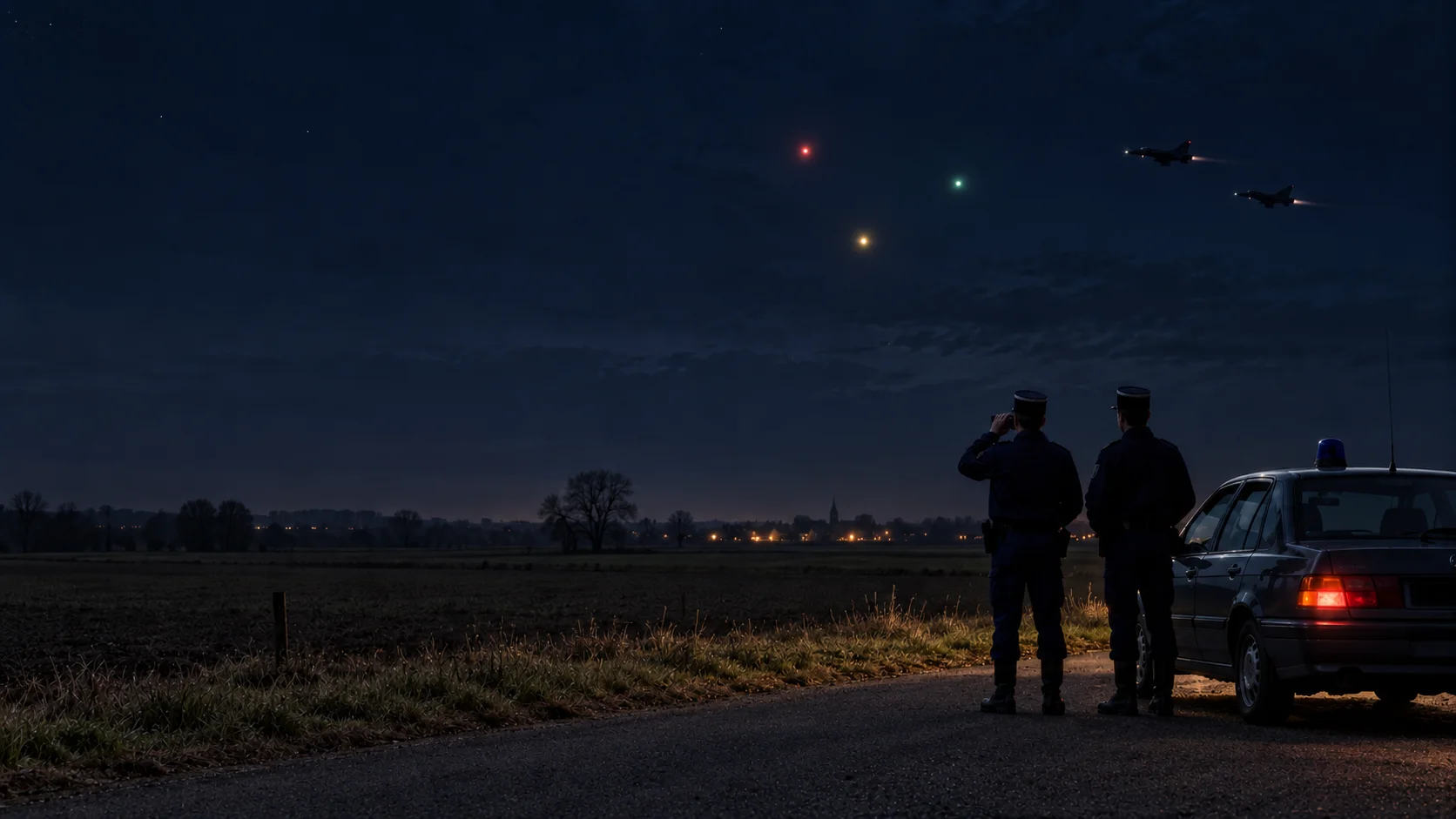
At 11 p.m. on March 30, 1990, a gendarme called the Belgian Air Force radar center at Glons. From his home in Ramillies, A. Renkin could see three lights in the direction of Thorembais and Gembloux. They were brighter than the stars around them, he said, and arranged as a triangle. Red, green and yellow appeared among their changing colors.
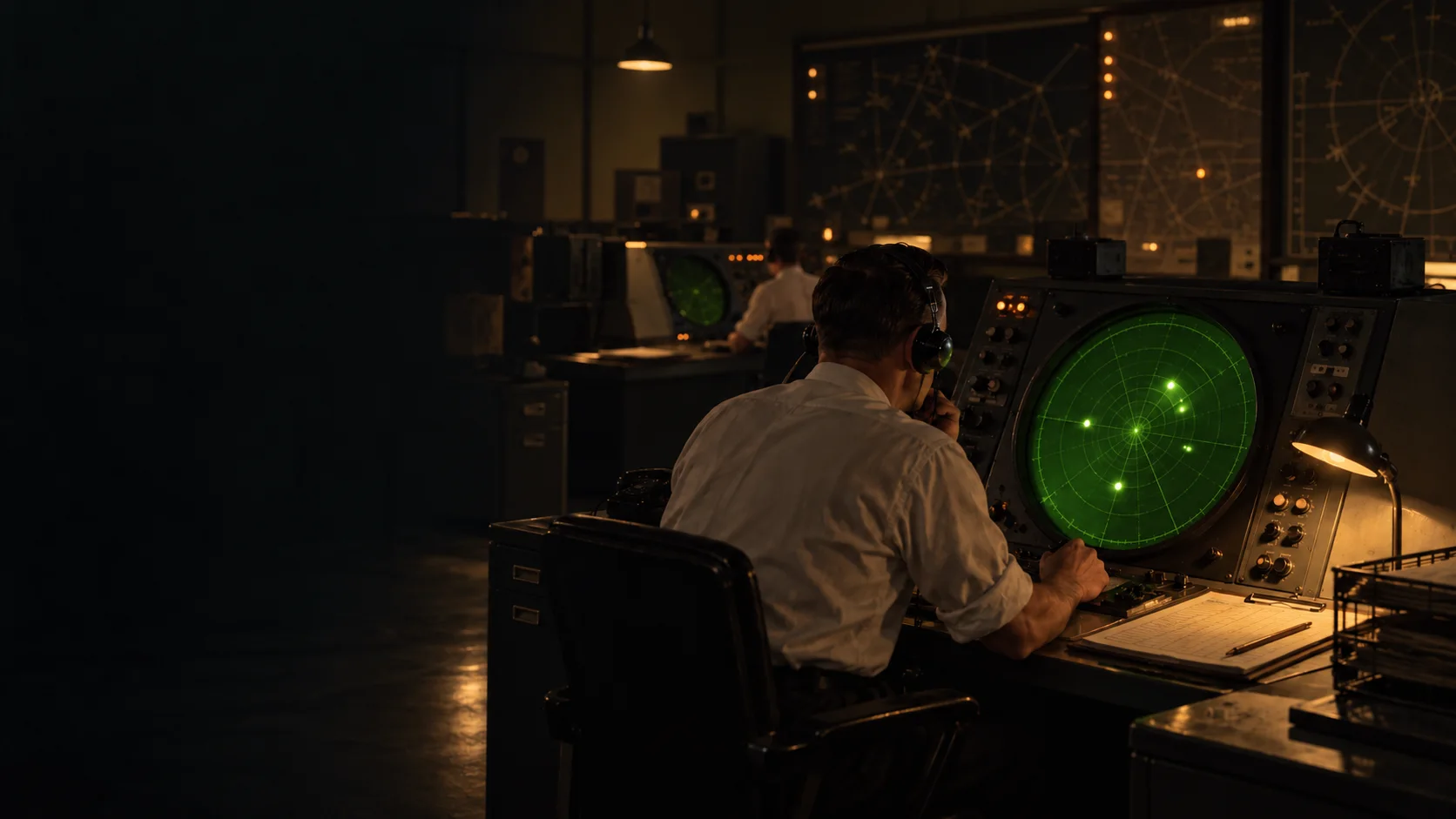
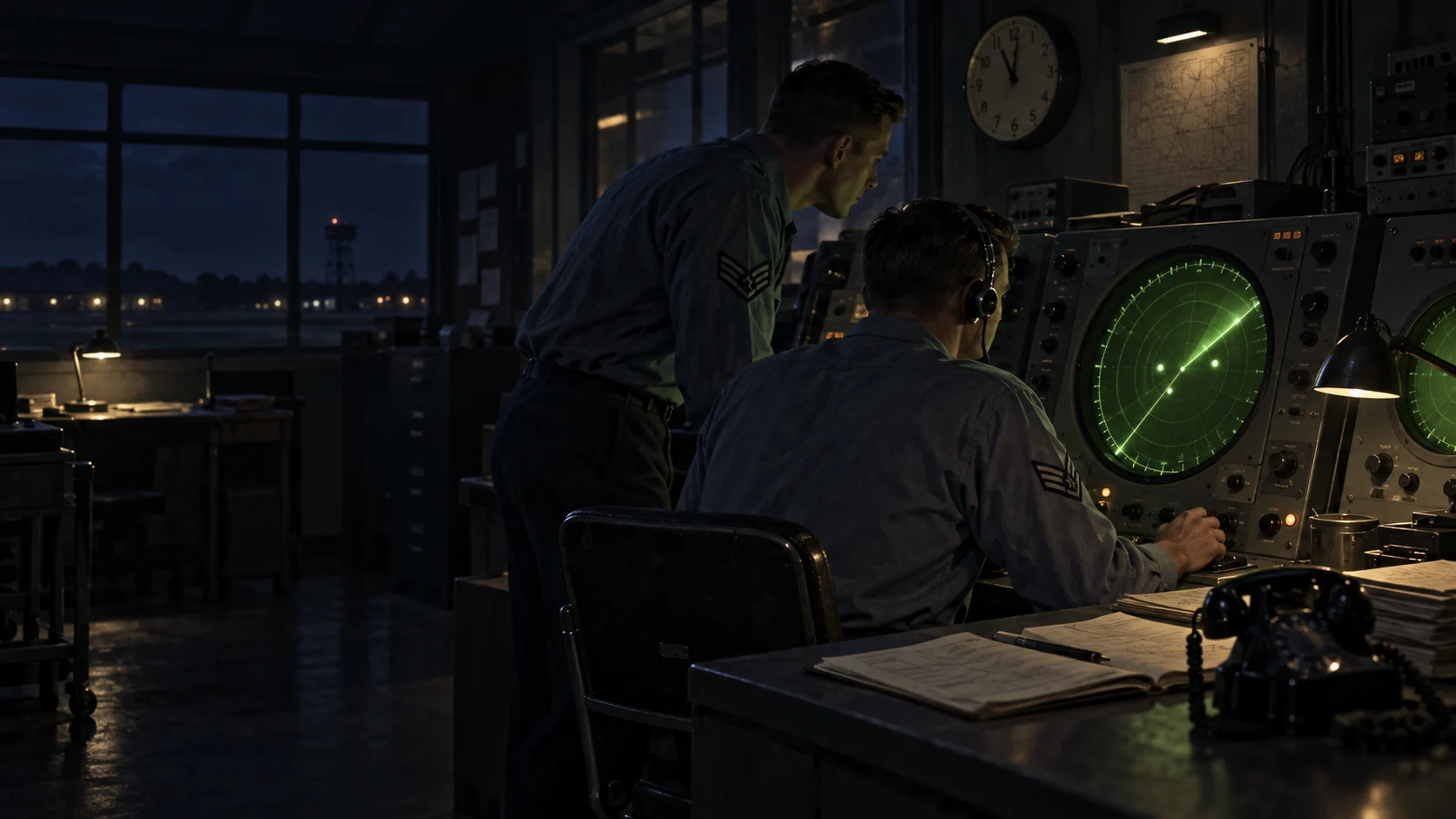
The controller at Glons asked the Wavre gendarmerie to send a patrol. Fifteen minutes after his first call, Renkin reported three more lights approaching the first group. Meanwhile, Glons had an unidentified radar return near Beauvechain, moving west at about 25 knots. A witness’s view of points in the sky had become a question for people watching an instrument elsewhere.
By 11:28, a patrol that included Captain Pinson had reached the area. The officers reported that they too could see the lights. Major P. Lambrechts’s Belgian Air Force report, compiled from unit and gendarmerie accounts, records Pinson describing points about the apparent size of large stars, their colors shifting as he watched. The lights were the reason the patrol had come; the officers were still looking at them when the Air Force considered sending aircraft.
Just before midnight, a second radar center reported a contact in the same position as the one at Glons. At 11:56, the order went out: scramble the fighters at Beauvechain.
The watch on the ground
The Air Force was already familiar with reports of unfamiliar lights over Belgium. Since late 1989, witnesses had described objects of various shapes, including large triangles. Its July 1990 public summary said earlier scrambles had not identified a cause. For a new launch, the service wanted both a sighting confirmed by local police and a radar detection. On this night, the calls from Ramillies and Wavre and the returns at Glons and Semmerzake met those conditions.
The Lambrechts chronology records the second group of lights drawing closer to the first between 11:30 and 11:45. The ground observers described the points making short, uneven movements before the newer group also seemed to take up a triangular arrangement. They were reporting patterns formed by lights, not an illuminated outline or a solid surface seen between them.
The positions did not stay fixed. From approximately 11:45 to shortly after midnight, observers said the whole formation drifted slowly against the stars. They also noticed two fainter points toward Éghezée. In the control centers, the issue was how to direct fighters toward the reported region while continuing to compare the visible lights with radar information.
At 11:49, according to Lambrechts’s report, the Semmerzake radar center began a period in which it confirmed a clear return at the position reported by Glons. That agreement helped bring the waiting aircraft into the case. It did not give the people on the ground a close view of what produced the return. The only way to try to identify it from the air was to go there.
Two aircraft after midnight
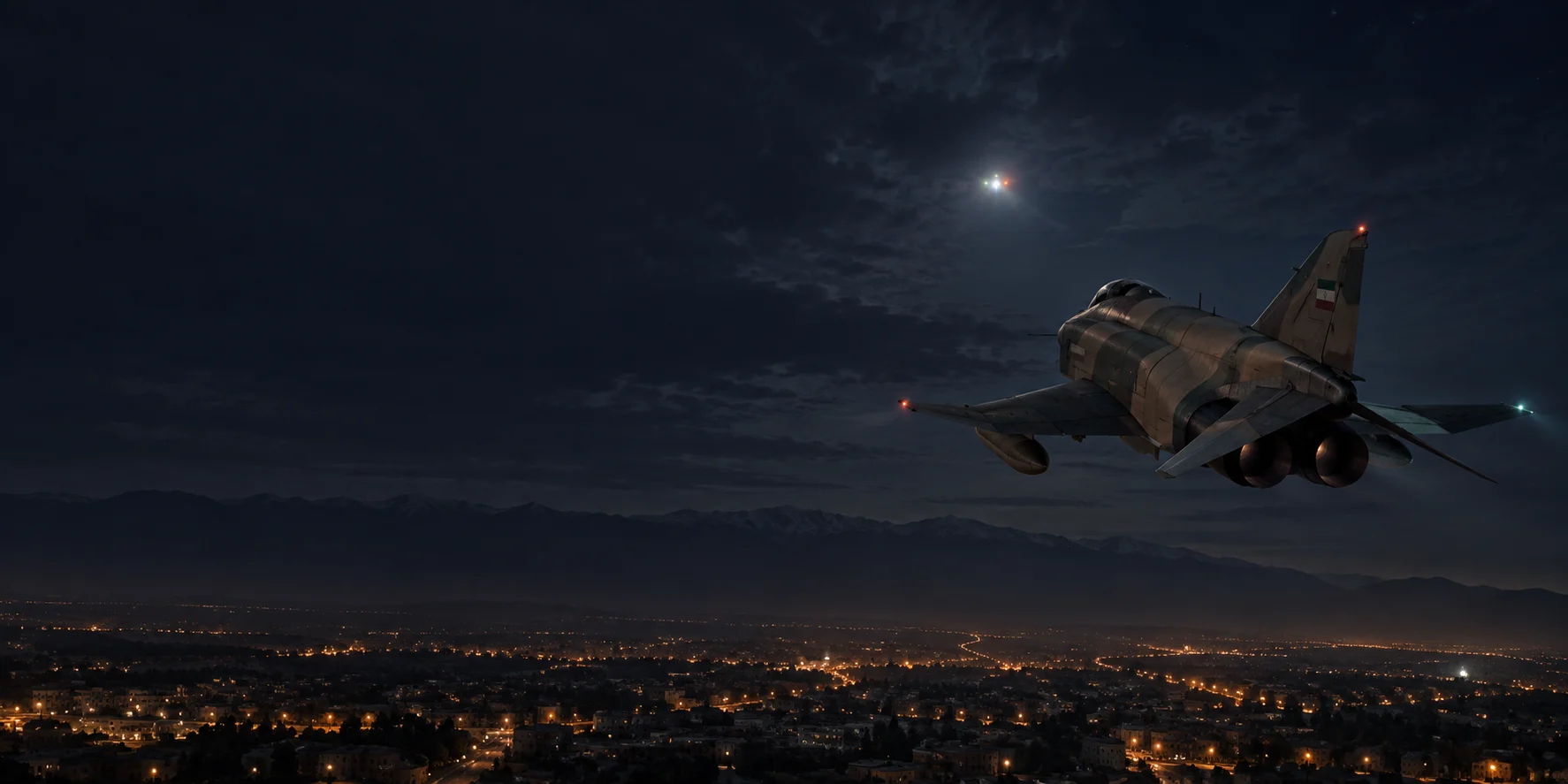
At 12:05 a.m. on March 31, two F-16s, logged as AL 17 and AL 23, took off from Beauvechain. Glons guided them. During the following hour, the Air Force chronology records nine attempts to intercept targets in the region. The fighter crews acquired short radar contacts on several occasions and reported three brief locks in that account.
At approximately 12:13, one F-16’s radar locked onto the first target designated by Glons. The display placed it six nautical miles ahead at about 9,000 feet. Then the displayed values changed sharply: the speed went from 150 to 970 knots, and the indicated altitude dropped, rose, and fell again. Within seconds, the lock broke. Glons told the fighters they were over the reported target’s position.
From inside the aircraft, there was no matching sight. Neither pilot reported seeing an unfamiliar object during the attempt. On the ground, people continued to report lights. A radar track, a controller’s instructions and a view of the sky were running in parallel, yet the pilots never joined them with a visual identification of their own.
The fighters stayed in the area. Between about 12:19 and 12:30, both Glons and Semmerzake lost the track they had been following. Contacts appeared intermittently but did not build a clear path. The pilots coordinated their movements through the Brussels civil-air-traffic frequency while remaining in radio contact with Glons. Ordinary air traffic procedures continued around the search.
Short locks
At about 12:30, one fighter acquired another radar contact, reported at 5,000 feet near Nivelles. The indicated speed was high. The lock lasted six seconds. At the moment it broke, the aircraft’s display showed a jamming indication, according to the Lambrechts report. The report records the display message; it does not establish that anyone deliberately interfered with the radar.
The ground witnesses saw the F-16s cross their field of view three times. During the third passage, they said, the planes circled near the center of the larger pattern of lights. The smaller triangle disappeared from view, while the brightest remaining point appeared to brighten and flash red. The officers watched the aircraft and the lights from below. The pilots, passing overhead, still reported no visual contact with the lights they were trying to find.
At 12:32, Glons and Semmerzake reported a contact moving toward Bierset. The Air Force account gives speeds between 478 and 690 knots before the track was lost. The Maastricht radar center across the border did not report a matching contact. Minutes later, at about 12:39–12:41, another attempted lock produced a sharp displayed speed change, from 100 to 600 knots, before both the airborne and Glons radars lost contact again.
These were dramatic numbers for a controller or pilot to see. They were also fleeting: seconds of tracking, then a broken lock, then another search. The pilots had a working mission rather than a continuous pursuit of a visible object. Glons could direct them to a reported position, but the sky ahead of the F-16s offered no sighting they could describe.
At 12:47, the Beauvechain approach radar reported another contact, which Glons also recorded in approximately the same position. More brief attempts followed. The ground observers said the last light they were watching faded from view around 1 a.m. At 1:02, the F-16s left the Glons frequency to return to base. AL 17 landed at 1:10; AL 23 at 1:16.
The night was not quite finished for the gendarmes. At 1:06, a patrol in Jodoigne called Glons about another observation. After arriving there, Pinson reported four white points forming what appeared to be a square around the town, with one brighter yellow-red light toward Orp-Jauche. Those lights, too, seemed to fade by about 1:30. By then the fighters were on the ground.
The report that followed
Lambrechts’s report brought the ground observations, the radar records and the fighter flight into one chronology. It concluded that the Belgian Air Force could not identify the nature or origin of the reported phenomena. Its authors regarded the radar contacts as related to the lights and considered several ordinary explanations unlikely. On July 11, Colonel Wilfried De Brouwer presented an official summary to the press.
For readers following that briefing, the most striking part was the contrast: multiple officers on the ground said they had watched changing lights; two military radar centers had reported returns; the fighters’ instruments had acquired brief locks. Yet the men sent closest to the indicated positions had seen no object. The encounter ended with the same division that had shaped it from the first call at Glons: a view from below, readings on screens, and an aircraft crossing between them.
What Is Known
The Lambrechts report is an Air Force compilation of unit logs, radar observations and gendarmerie accounts made soon after the event. It documents a real scramble, patrol reports of lights, ground-radar contacts, brief F-16 radar locks and the pilots’ lack of visual contact. De Brouwer’s 1990 press summary conveyed the Air Force’s then-current inability to identify a cause. Those are records of observations and official interpretations; they do not establish that each light and each radar return had a single source.
A more detailed Belgian Air Force engineering analysis of the F-16 recordings was released by the Ministry of Defence in 2025. Working through thirteen radar contacts visible on a fighter’s recording, the analysts identified contacts 8, 9 and 10 as the other F-16. They explained how the radar’s Kalman tracking filter, which predicts target positions between measurements, could produce apparent jumps, fictitious stretches of track or a switch between targets. The report therefore challenged a simple reading of the displayed speeds and altitudes as the motion of one extraordinary craft.
That technical report did not identify the origin of every ground-witness light. Its authors said their reconstructions of individual interceptions remained partly hypothetical, proposed a controlled test of the radar under similar conditions, and said their study could not securely connect the aircraft contacts to the visual reports. Its significance is the distinction between a value displayed by a radar system and a movement independently established in the sky. The pilots’ screens recorded contacts; the later analysis showed why the most sensational numbers require care.
The Bigger Picture
The scramble occurred within the wider Belgian wave of reports that began in 1989. COBEPS’s history of its predecessor SOBEPS describes civilian investigation and cooperation with the Air Force during that period. A later COBEPS retrospective revisited the March 1990 radar episode as part of a larger collection of witness accounts. The separate reports of large triangular craft from other nights helped shape public expectations, although this particular night’s initial witnesses described points of light.
The case traveled beyond Belgium. A UK National Archives guide identifies Belgian Air Force statements preserved in British defence files and describes the F-16 lock-ons as unresolved in those records. The later engineering analysis adds another chapter to that history: the pilots’ inability to see a target remains a fact of the flight, while the radar numbers no longer speak for themselves. The image left by the case is of people beneath an open sky watching lights and two fighters searching above them, each position giving its observers only part of the night.
Sources
- Original Belgian Air Force investigation, French transcription: Major P. Lambrechts, report on the observations of March 30–31, 1990, compiled from unit and gendarmerie material; reproduced by Patrick Gross.
- Contemporary official public summary, English transcription: Colonel Wilfried De Brouwer, Belgian Air Force briefing summary, July 11, 1990; reproduced by Patrick Gross.
- Original Belgian Air Force technical investigation, later release: Report directed by Lieutenant Colonel Salmon on the F-16 radar recordings, facsimile and OCR of a Ministry of Defence copy released in 2025. The report’s radar-filter reconstructions are explicitly qualified as hypotheses.
- Independent archival context: UK National Archives, UFO files highlights guide, August 2009, page 3, identifying Belgian Air Force statements in British defence files.
- Investigator-organization history: COBEPS, history of SOBEPS, describing the Belgian wave and civilian–military cooperation.
- Retrospective investigation: COBEPS, study of the Belgian wave, 2013, including its reassessment of the March 1990 radar episode.