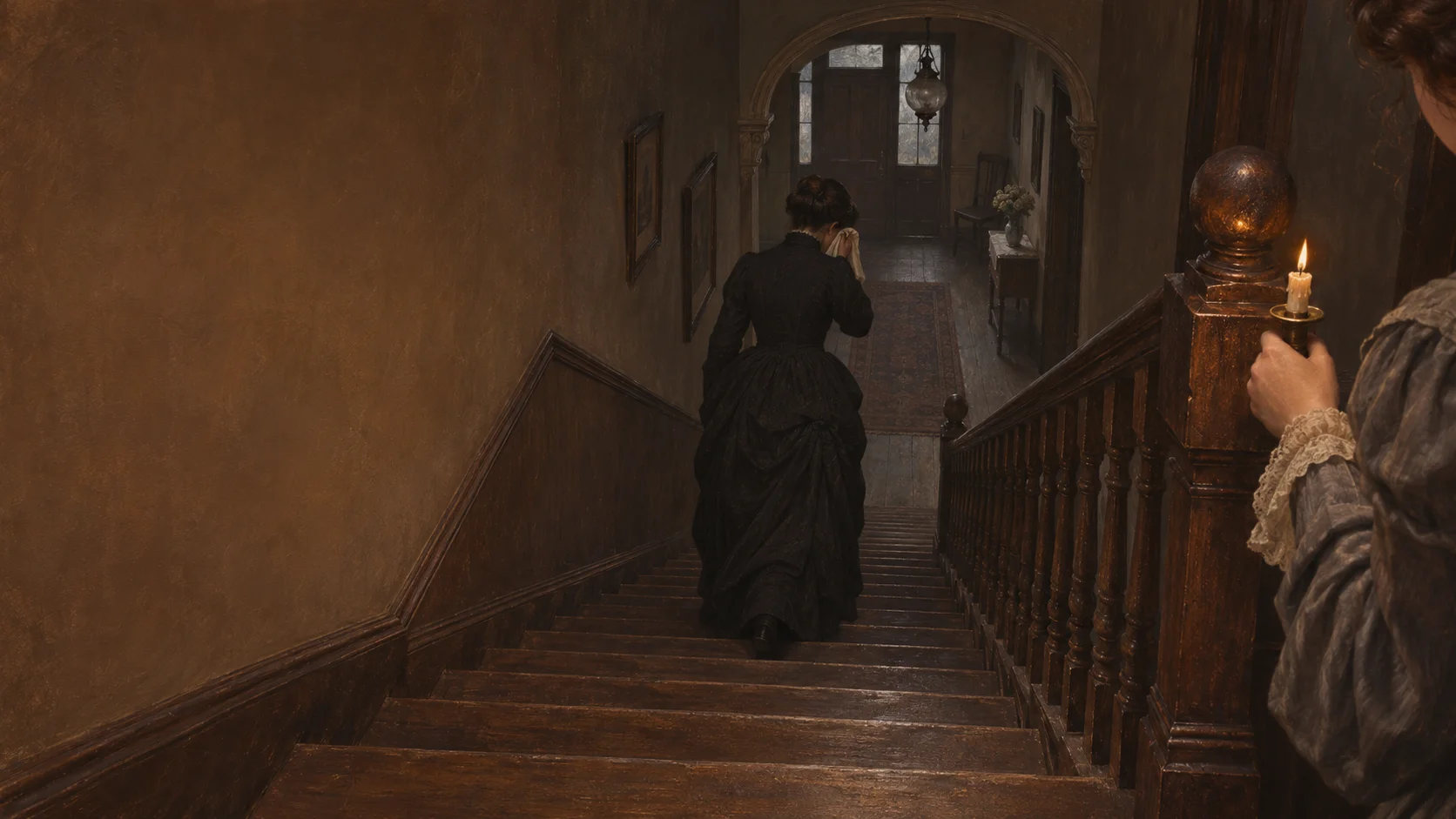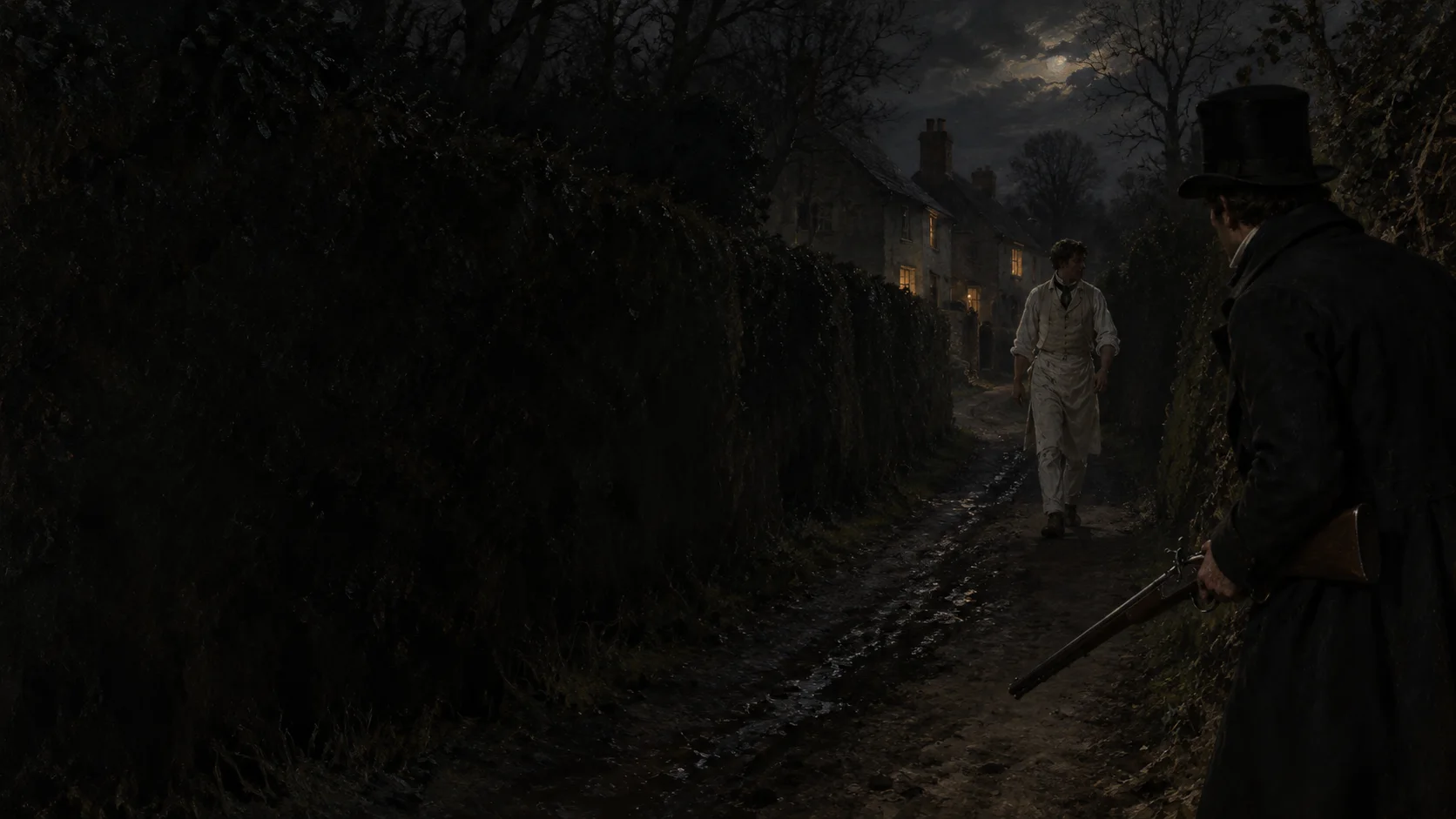
Hans Christiernsson told the court he had seen Annika Thomsdotter in Blåkulla the night before. She had been standing on the floor. Annika said he had it wrong. She had stood on the steps beside the hearth, in a place the children called the angel stair.
It was September 11, 1676, in Stockholm. Both witnesses had come to speak against Margareta Staffansdotter Remmer, the wife of a city captain. Hans said there had been so many people in Blåkulla that he might have mistaken someone else for Annika. The court asked how he knew he had been taken there at all.
He had spent part of the previous evening in a room where people kept watch over children. Two young women there told him he was in Blåkulla. Then he went home and lay down to sleep. That was when he felt he had been carried away.
The rooms on Södermalm
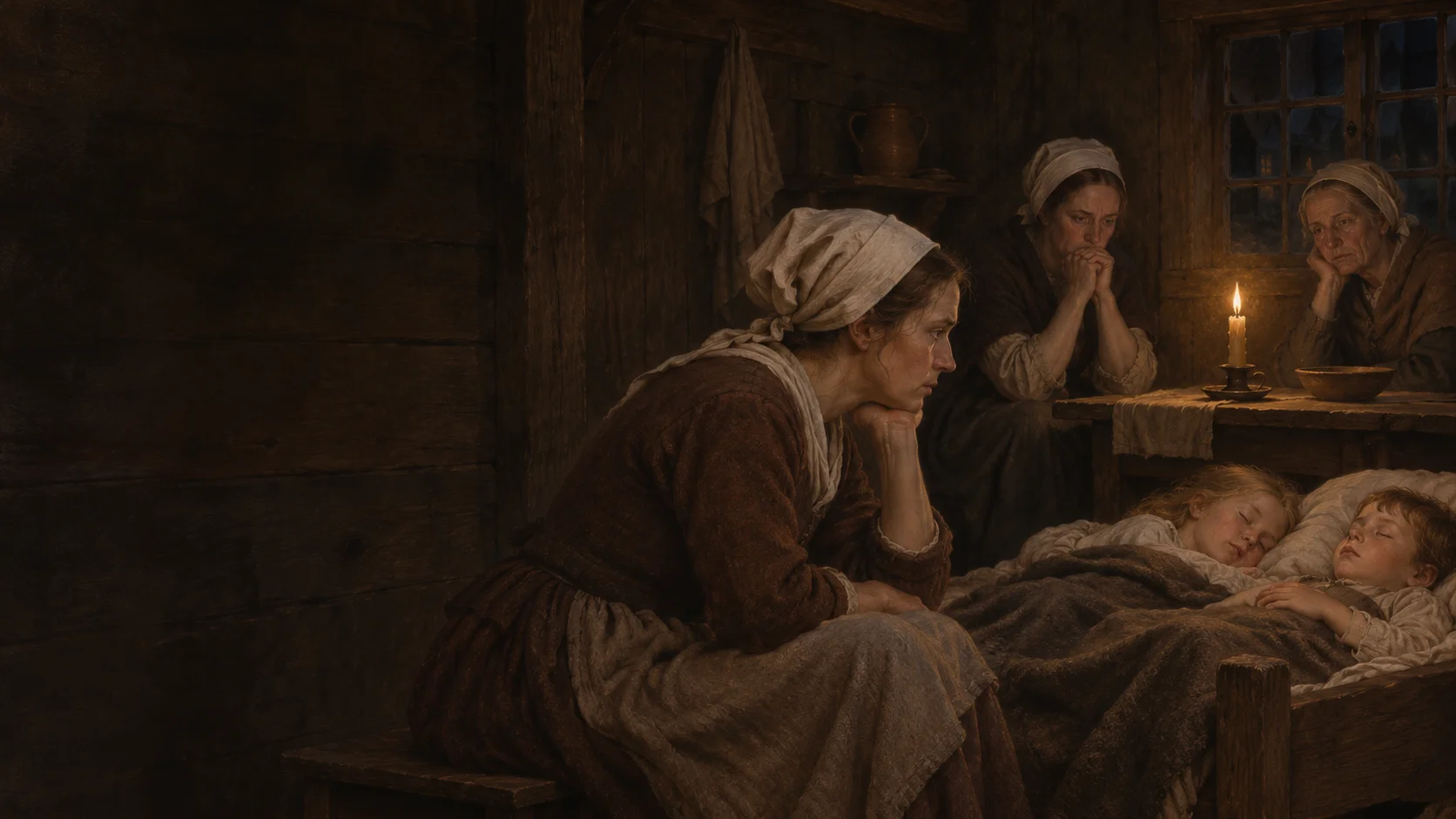
The watches had begun with a problem parents thought they could see in their own homes. Children woke tired and sore, or spoke of going somewhere during the night. Some fell down as if they had fainted and told stories of being carried away when they recovered. By the time such reports reached Stockholm, they had already been heard in other parts of Sweden.
In 1675 a boy named Johan Johansson Griis arrived on Södermalm from Gävle. He stayed with relatives and told the local children that his own mother had taken him to Blåkulla. He claimed he could tell which children were being taken and who came for them. As the historian Marko Lamberg describes it, some parents paid Johan for answers about their own children. If he said a child had been carried away, the child could be pressed to admit it.
Households began holding night watches, known as vakstugor. Adults took turns staying awake with the children. Johan went to the watches and warned of women approaching from the street or the yards. Children heard how other children were said to have been carried away, what happened when they arrived and who was there. The destination was so familiar that, in the testimony, a witness could speak simply of being taken. The court knew the place meant was Blåkulla.
Two of the young women who named supposed travellers were Annika Henriksdotter and Agnis Eskilsdotter. Both worked for Jonas Persson Myra and were known as the Myra maids. When an accused woman refused to confess, the maids could say they saw the Devil beside her, preventing her from speaking. They named children as well as women. Those children could then be asked to name the person who had taken them.
Names before the court
Anna Sippel was married to a baker. Her sister Brita was married to a mason. They were already known in the neighbourhood when the reports of journeys to Blåkulla began to converge on their households. Much of what witnesses said took an ordinary detail, such as a person’s clothes or a place where she lived, and put it alongside something fantastic. One young witness said Anna had tried to entice her with pastries and take her to a feast.
The printed proceedings of the Svea Court of Appeal preserve a similar exchange in the case of Anna Månsdotter, a cap-maker. An eight-year-old told the court that she had seen Månsdotter in Blåkulla wearing the very clothes she had on in court. Månsdotter said she had spent the night in an old jacket that was downstairs in the cellar. When pressed to confess, she asked how the judges could tell whether the children had been dreaming. They asked why she spoke of dreams. Because, she answered, the children said they were taken while they slept.
The death sentences for Månsdotter and the Sippel sisters came on April 24. Månsdotter was executed two days later and the sisters on April 29. None of the three admitted to witchcraft. The reports of children being taken continued into the summer, and more women were accused.
A royal commission took up the cases in July. Its members swore to hear the complaints and weigh the evidence fairly. Among those accused was Malin Matsdotter, a widow from Finland. Her daughters were among the people questioned about her. She continued to deny witchcraft and was executed on August 5. As the commission entered September, it still had death sentences before it and people waiting to learn whether they would live.
What Annika had heard
On the morning of September 11, the commission discussed whether several existing sentences should be carried out. One of its clergy, the chaplain Erik Noraeus, said he could no longer take part in condemning people to death for witchcraft on the evidence before him. The judges then heard witnesses in Remmer’s case. They asked Hans and Annika to recite the commandment against bearing false witness.
Before the dispute about the steps, Annika had described Remmer’s clothes in detail. She distinguished what Remmer wore on Sundays from her weekday skirt and jacket. She said she could see her plainly in Blåkulla and could describe what she did there. When Hans was asked to account for his own certainty, he led the court back to the two maids in the watch room.
The court put a similar question to Annika. Who had first told her she was being taken? The printed minutes say she began to cry and named the Myra maids. They had told her employer that she was in Blåkulla. When her mother heard the claim, she took Annika to the Myra household to ask whether it was true. A woman there told Annika to say the Lord’s Prayer three times. While she was trying to do so, the maids kept coming in and out and insisting she was in Blåkulla.
Annika told the judges what happened to anyone who refused to say they had been taken. Anyone who kept denying the journeys could be accused of taking children themselves. Annika said she had been threatened with just that. The court offered her protection. She said she had never been to Blåkulla and had never seen Remmer there. The stairs and the other details had come from what people told her. She did feel weak and sore in the mornings. She could give the court no reason for it.
The witnesses return
The judges called in another young servant, Kerstin. She said the maids had first told her she was in Blåkulla while they were keeping watch over her employer’s sons. She denied knowing anything of the kind. Later, at the Myra house, the maids and another witness, Lisbet Carlsdotter, kept her there for four hours, pinched her cheeks and pressed her to say what the other children said. What they wanted, she told the court, was for her to name Remmer.
Several commissioners stayed to hear more witnesses that afternoon and into the evening. Lisbet stood by her account even as the young people she claimed to have seen in Blåkulla denied going there. Eventually she too admitted she had lied. Some witnesses went back to their old stories when questioned again. Others repeated their admissions in front of their parents and guardians. The next day, the commission asked that pending executions be postponed.
On September 27 the judges voted in Remmer’s case. By majority they acquitted her. When the ruling was put in writing on October 6, it said that people who kept accusing her could themselves be punished. The Sippel sisters and Malin Matsdotter had faced much the same kind of testimony months earlier. There was no way for a later ruling to give them back their lives.
What Is Known
The September 11 minutes record a series of retractions, with different witnesses describing what they had heard and who had pressured them. The surviving Remmer inquiry is held by Stockholm City Archives. The account of the questioning draws on the abridged proceedings printed in 1822 and Lamberg’s reconstruction from the archival records. The court’s change of course unfolded across several hearings.
Some of the young people who had helped spread the accusations were executed after the reversal. In Johan Griis’s case, Lamberg found that the commission ultimately called for an earlier death sentence for witchcraft to be carried out even after the boy admitted inventing his stories. Other young witnesses received corporal punishment or were sent to a house of correction.
The Bigger Picture
Blåkulla had a place in Swedish folklore long before the Stockholm trials. Historian Bengt Ankarloo traces the belief in night flight and gatherings there back to at least the late Middle Ages. In the seventeenth century those older ideas gave people a familiar setting for accounts of meetings with the Devil. In Katarina, a child could tell the court where someone had stood in that place as readily as they could describe where a neighbour lived.
In February 1677 the commission moved to take references to Blåkulla and the carrying away of children out of a public prayer. Some clergy kept using the old wording, and Lamberg found that some night watches continued in secret. The court had given Remmer a written judgment. Some families on Södermalm were still keeping watch.
Sources
- Svea Court of Appeal inquiry, Historiska samlingar, vol. 4 (1812) — Printed extracts from the 1676 proceedings. Pages 242–243 record the exchange with Anna Månsdotter about the children’s testimony and dreams.
- Royal commission inquiry, Historiska samlingar, vol. 5 (1822) — Abridged printed proceedings. Pages 265–270 contain the September 11 testimony of Hans, Annika and Kerstin.
- Kaptenskans rannsakning, 1676 — Stockholm City Archives catalogue and digitized manuscript of the inquiry into Margareta Staffansdotter Remmer.
- Royal commission oath, July 24, 1676 — Transcription of the signed oath, held by the Swedish National Archives.
- Marko Lamberg, Häxmodern: Berättelsen om Malin Matsdotter (2021) — Archival study, particularly chapters 6, 16, 19, 21 and 24 on the watches, the September hearings and the rulings that followed.
- Bengt Ankarloo, “Sweden: The Mass Burnings (1668–1676)” (1990) — Historical context on the interaction between Blåkulla folklore and learned ideas about witchcraft, especially p. 290.