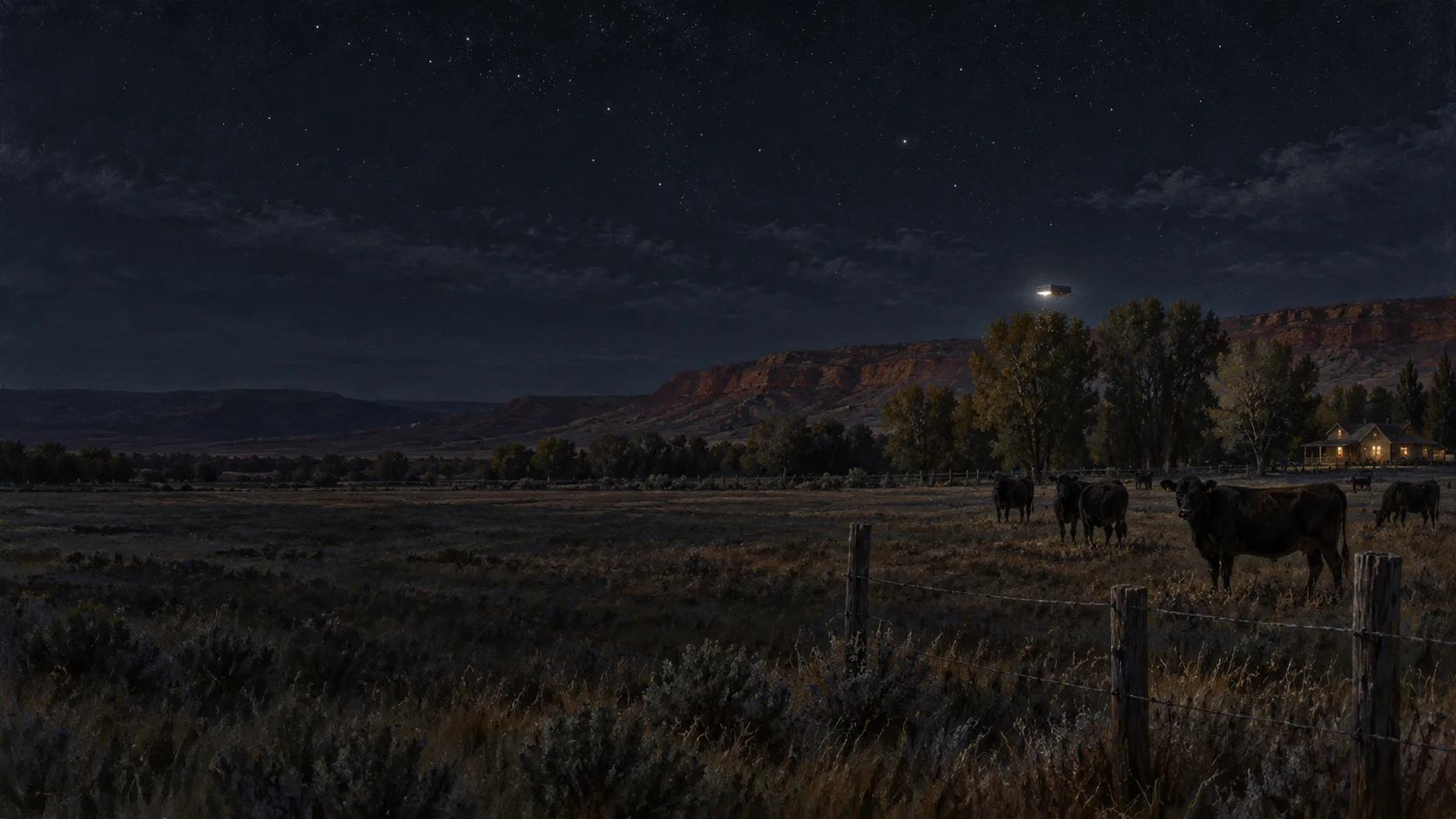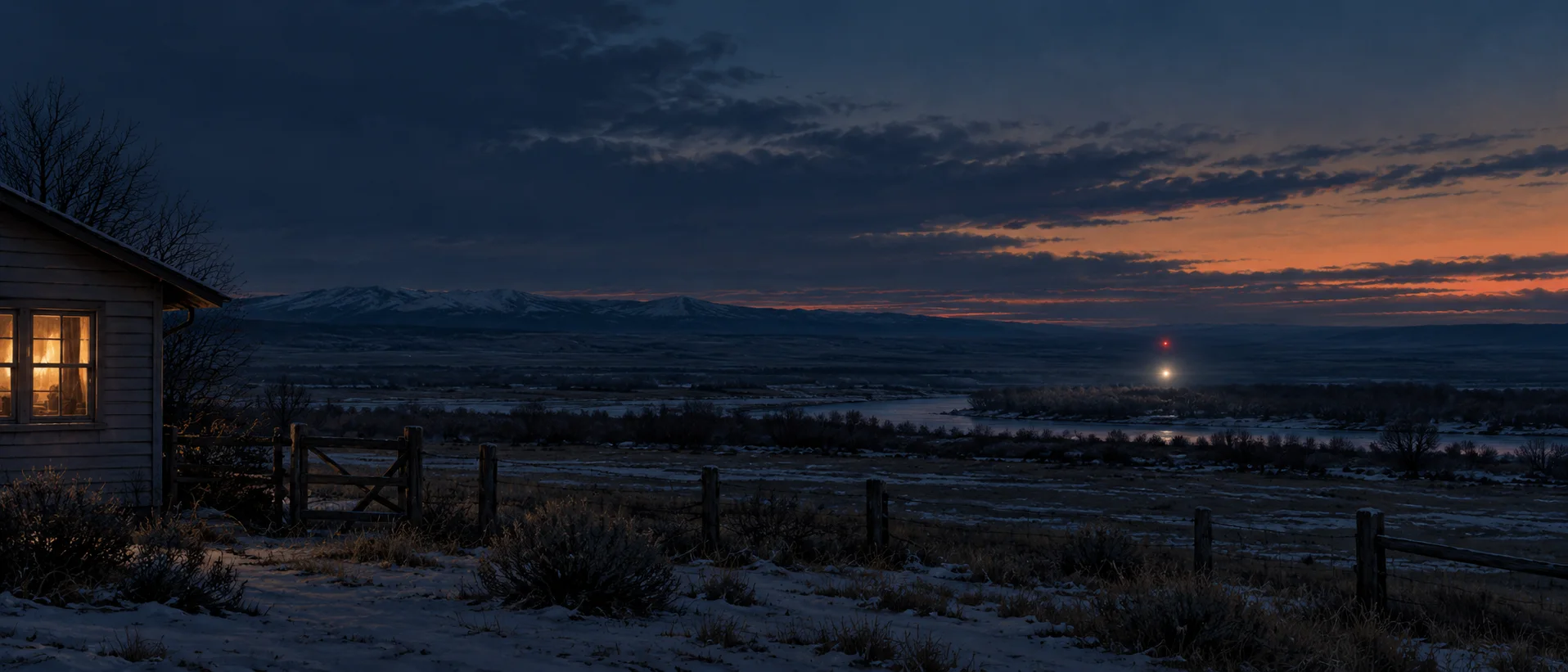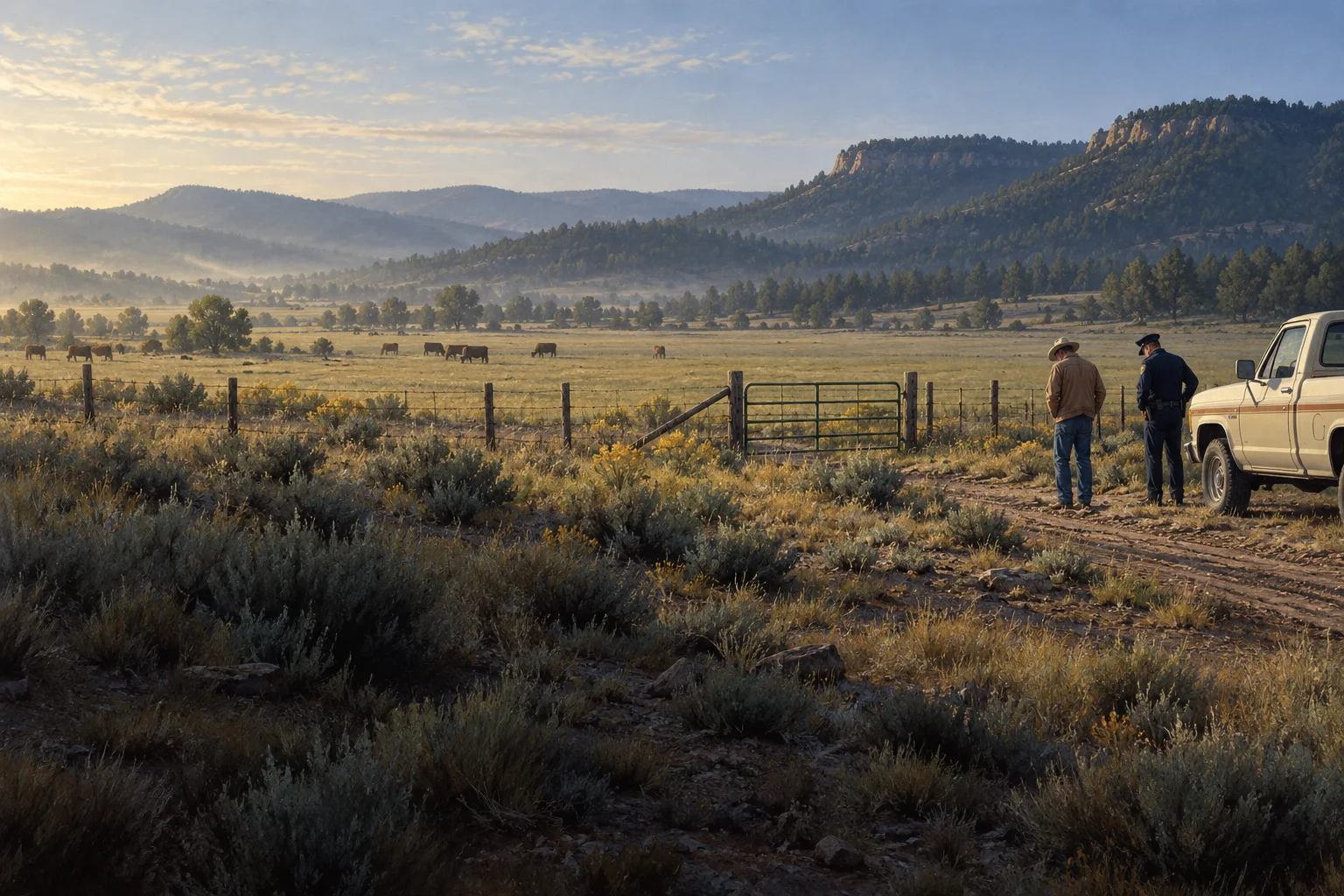
Manuel Gomez called the police after finding a dead cow on his ranch.
It was June 13, 1976. Officer Gabriel Valdez arranged to visit the following morning with livestock official Paul Riley. The report he later prepared described a locked property and only Gomez’s pickup tracks.
Around the animal
The cow lay on its right side. Parts of its body were missing; Valdez thought the edges indicated a sharp instrument. He noted no blood on the hide.
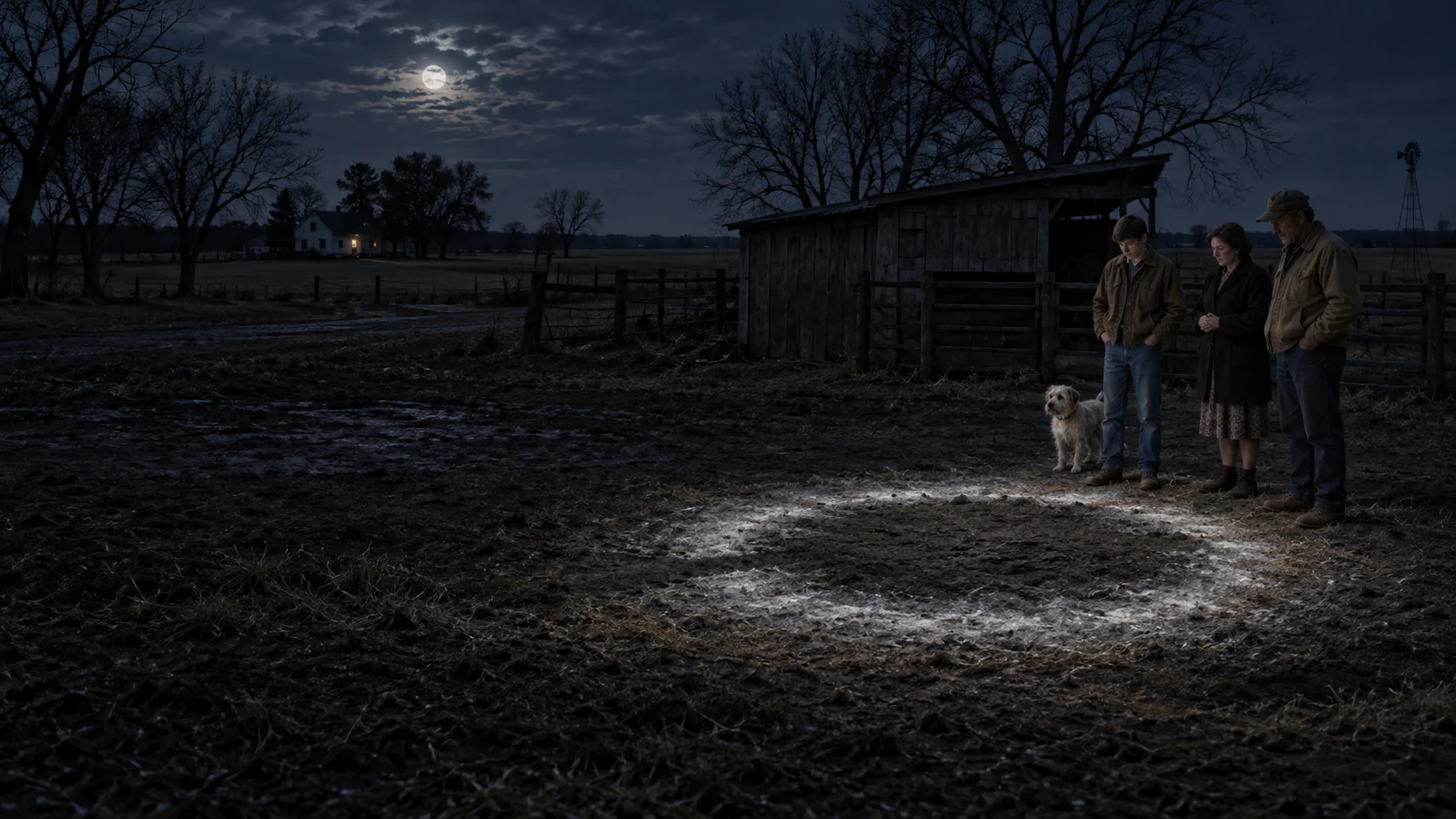
Nearby, he described large circular impressions arranged in triangles, and smaller marks following the cow’s tracks for about 600 feet. To him, they suggested landings and movement towards the animal. He also reported scorched grass and a yellow oily substance.
Gomez said the left ear had been present when he first found the cow. Marks now crossed his tire tracks. Valdez believed something had returned. The cow’s young calf was missing too.
Samples went for analysis. On June 17, retired scientist Howard Burgess visited for radiation measurements; Valdez recorded readings twice background near the marks.
The investigation continued.
The rancher at the library
Nearly three years later, Gomez stood before a much larger audience.
On April 20, 1979, a conference convened at Albuquerque’s public library. Senator Harrison Schmitt and U.S. Attorney R. E. Thompson chaired the proceedings. According to the FBI’s account, written five days later, approximately 180 people attended the morning session: police, reporters and members of the public.
The meeting was intended to establish the scale of the livestock problem and the basis for federal assistance. Reports from ranches had reached a room where officials were discussing who could investigate them, and how.
Valdez addressed the gathering. He said he had investigated the deaths of ninety cattle and six horses over the previous three years. He remained convinced that the precision of the wounds argued against predators. Among the properties he named was Gomez’s ranch.
Then Gomez spoke for himself.
He reported six unexplained animal deaths, with the bodies found mutilated, during the preceding two years. His account was about continuing losses; that two-year total was not a count of animals from the June 1976 incident.
He told the conference that he and his family were experiencing fear and mental anguish.
The officer had described cuts and marks. The rancher described what it was like to keep living with the losses.
Someone to take the reports
Officials at the conference were trying to turn scattered investigations into a coordinated operation.
Forrest Putman, who headed the Albuquerque FBI office, explained that the Justice Department had authorized investigations of mutilations on Indian lands. Comparable incidents elsewhere could help investigators compare methods and circumstances.
Santa Fe district attorney Eloy Martinez described an application for federal funding. He wanted a dedicated unit that could collect information, arrange qualified laboratory examinations and bring evidence and photographs together.
The proposal gave reports like Gomez’s a prospective destination beyond the local officer’s file. A rancher could report a loss; police could examine the scene; a central unit could assemble the results.
In the afternoon, law enforcement representatives met separately. They discussed whether coordination should fall to the FBI, the state police or the proposed district attorney’s unit. Funding and agency approval would determine the next step.
Those present recommended a central collection point, a standard reporting procedure and examination by qualified veterinary pathologists. Gomez’s testimony had entered a public record, while investigators worked towards a common way of handling the next call.
What Is Known
Valdez’s report was prepared in December, six months after the discovery. It preserves his observations and interpretations; it does not establish that an aircraft made the impressions or caused the death. The FBI conference account independently documents Gomez’s later testimony and the effort to organize an investigation.
In his 1980 review, Kenneth Rommel revisited the reported traces. A state laboratory spokesman told him that analysis revealed grass, with no remaining unusual substance. Rommel challenged the radiation claim because its measurement procedure and baseline were insufficiently documented.
He explicitly acknowledged that he had not seen the tracks. His suggestion that hoofprints could weather into circular depressions was a possible explanation, not a direct identification of the 1976 impressions. This was a retrospective review, not a fresh examination of Gomez’s cow.
The Bigger Picture
The FBI’s collection introduction places the reports within a wider mid-1970s livestock controversy and explains the bureau’s generally limited jurisdiction. Its files preserve correspondence and press coverage as well as investigative documents; inclusion is not endorsement of an extraordinary explanation.
The Gomez case followed a tangible route: a rancher’s call, an officer’s visit, samples, a written report and public testimony. Its enduring tension lies between the interpretation of a disturbing scene and the effort to explain it through shared investigative work. By 1979, Gomez had a roomful of people listening. What he wanted explained was still the loss at his ranch.
Sources
- Gabriel L. Valdez, Offense/Incident Report, prepared December 15, 1976. Archival transcription of a state police report concerning the June 13 discovery and subsequent investigation; written six months later.
- FBI, Cattle Mutilations, April 25, 1979. Contemporary federal account of the April 20 conference; PDF pages 23–27, with Valdez and Gomez on page 24. Documents statements made at the meeting, rather than validating their conclusions.
- Kenneth M. Rommel Jr., Operation Animal Mutilation, June 1980, chapter III. Later official review of earlier New Mexico cases, including the reported 1976 traces; archival transcription.
- FBI Vault, Animal Mutilation collection introduction. Official archival context and explanation of the bureau’s jurisdiction.